In the field of industrial water treatment,corrosion and scale inhibitors play a crucial role.It can effectively inhibit the corrosion of metal equipment,prevent scale from depositing on the inner walls of pipelines and equipment,thereby ensuring the stable operation of industrial systems,extending the service life of equipment,and reducing maintenance costs.The following will provide a detailed analysis of three targeted corrosion and scale inhibitor formulations.
1.Formula of corrosion and scale inhibitor for high hardness water quality
1.Formula composition
This formula is mainly composed of polyacrylic acid polymer,organic phosphonate,zinc salt,and dispersant.Polyacrylic acid polymers have good dispersibility and can effectively disperse small particles in water,preventing their aggregation and formation of scale.Organic phosphonates,such as hydroxyethyl diphosphate(HEDP),have excellent chelating ability and can form stable complexes with metal ions such as calcium and magnesium in water,preventing the formation of scale.Zinc salts,as corrosion inhibitors,can form a protective film on the surface of metals to inhibit their corrosion.Dispersants help to evenly disperse various components in water and improve the effectiveness of drug use.
2.Proportioning principle
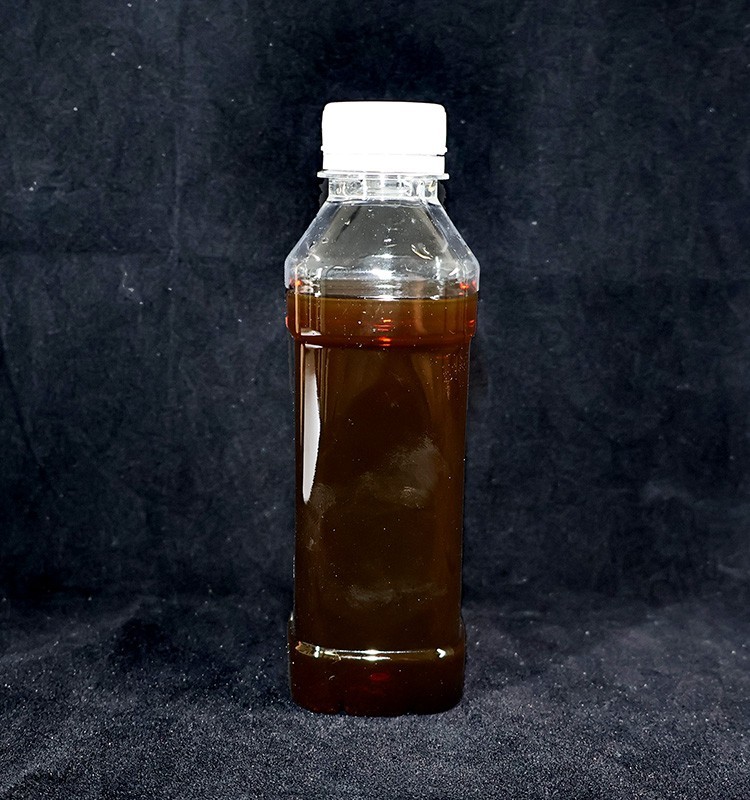
In high hardness water,the content of calcium and magnesium ions is high,which makes it easy to form scale such as calcium carbonate and calcium sulfate.The addition amount of polyacrylic acid polymer is usually between 10%and 20%.Its function is to adsorb on the surface of small particles,increase the repulsion between particles,and keep the particles in a dispersed state,which is not easy to precipitate and scale.The addition amount of organic phosphonate is generally 15%-25%.It can undergo chelation reaction with calcium and magnesium ions,change the crystal form of ions,and make the generated scale loose and fragile,which is easily washed away by water flow.The addition amount of zinc salt is controlled at 5%-10%.After forming a protective film on the metal surface,it can effectively prevent water and oxygen from contacting the metal,thereby slowing down the corrosion rate.The amount of dispersant added is relatively small,about 2%-5%,mainly serving as an auxiliary dispersant.
3.Mechanism of action
When the corrosion and scale inhibitor is added to high hardness water,the polyacrylic polymer quickly disperses in the water and adsorbs onto small particles,keeping them suspended.Organic phosphonates combine with calcium and magnesium ions in water to form stable complexes,disrupting the crystallization process of scale.Zinc salts undergo chemical reactions on metal surfaces,forming a dense protective film that prevents corrosive media from coming into contact with the metal.At the same time,dispersants ensure uniform distribution of each component,enabling the entire system to achieve optimal corrosion and scale inhibition effects.
2.Formula for corrosion and scale inhibitors for high-temperature water systems
1.Formula composition
This formula contains organic phosphate esters,polyol phosphate esters,sodium tungstate,and benzotriazole(BTA).Organic phosphate esters have high temperature resistance and can maintain stable performance in high-temperature environments,effectively inhibiting the formation of scale.Polyol phosphate esters not only have scale inhibition effects,but also can improve the corrosion resistance of metal surfaces to a certain extent.Sodium tungstate,as a corrosion inhibitor,can form stable compounds with metals at high temperatures,enhancing their corrosion resistance.Benzotriazole has a good corrosion inhibition effect on copper and copper alloys,and is suitable for systems containing copper equipment.
2.Proportioning principle
In high-temperature water systems,the physical and chemical properties of water change,requiring higher performance of corrosion and scale inhibitors.The addition amount of organic phosphate esters is generally between 20%and 30%,and their high temperature resistance enables them to continuously exert scale inhibition effects in high temperature environments.The addition amount of polyol phosphate ester is about 15%-20%,which works synergistically with organic phosphate ester to enhance scale and corrosion inhibition effects.The addition amount of sodium tungstate is controlled at 10%-15%,and the protective film formed by reacting with metals at high temperatures can effectively resist corrosion.The addition amount of benzotriazole is relatively small,ranging from 2%to 5%,mainly for the protection of copper and copper alloy equipment.
3.Mechanism of action
In high-temperature water systems,organic phosphate esters and polyol phosphate esters prevent the formation and deposition of scale through chelation and dispersion.Sodium tungstate undergoes a chemical reaction on the metal surface,forming a stable compound film that prevents the corrosive medium in high-temperature water from coming into contact with the metal.Benzotriazole specifically adsorbs on the surface of copper and copper alloys,forming a protective film to prevent copper equipment from being corroded.The various components work together to ensure the stable operation of the high-temperature water system.
3.Formula for corrosion and scale inhibitors for copper containing equipment water systems
1.Formula composition
This formula mainly consists of benzotriazole(BTA),methylbenzotriazole(TTA),polycarboxylate salts,and sodium gluconate.Benzotriazole and methylbenzotriazole are corrosion inhibitors specifically designed for copper and copper alloys,which can effectively inhibit the corrosion of copper equipment.Polycarboxylate salts have good dispersion and scale inhibition properties,which can prevent impurities in water from depositing on the inner walls of equipment.Sodium gluconate has certain corrosion inhibition and synergistic effects,which can enhance the performance of the entire formula.
2.Proportioning principle
Copper corrosion is a key issue in copper containing equipment water systems.The total amount of benzotriazole and methylbenzotriazole added is generally between 10%and 15%.They can form a dense protective film on the copper surface,preventing water and oxygen from coming into contact with copper.The addition amount of polycarboxylate salt is about 20%-30%,mainly used for dispersion and scale inhibition,preventing calcium and magnesium ions in water from forming scale.The addition amount of sodium gluconate is controlled at 5%-10%,and it works synergistically with other ingredients to improve the corrosion and scale inhibition effect of the formula.
3.Mechanism of action
When the corrosion and scale inhibitor is added to the copper containing equipment water system,benzotriazole and methylbenzotriazole quickly adsorb onto the copper surface,forming a protective film to inhibit copper corrosion.The impurities of polycarboxylate salts dispersed in water prevent them from depositing on the inner walls of equipment and forming scale.Sodium gluconate enhances the corrosion and scale inhibition performance of the entire formula through synergistic effects with other components,ensuring the normal operation of copper containing equipment water systems.
Different industrial water systems have varying requirements for corrosion and scale inhibitors.By selecting and proportioning various components reasonably,corrosion and scale inhibitor formulas can be developed for different water qualities,effectively solving the problems of corrosion and scaling in industrial water treatment,and providing strong guarantees for the efficient and stable operation of industrial production.

 E-mail:jcl@jichanglong.com
 WhatsApp:+8618560709619
 Address:Block B, Polymer Materials Industry Innovation Park,No. 51, Lutai Avenue, High-tech Zone, Zibo City, Shandong Province


