Well water, as a common water source, is widely used in rural areas, urban outskirts, and industrial production. However, due to its complex origins, well water is susceptible to external environmental factors and pollution sources, often resulting in water quality that fails to meet drinking water standards. It may contain contaminants such as bacteria, viruses, and harmful chemicals. Therefore, ensuring the safety and hygiene of well water is of utmost importance. Calcium hypochlorite disinfection tablets, as an effective disinfectant, play a vital role in well water treatment.
Calcium hypochlorite disinfection tablets possess potent bactericidal and disinfecting properties, making them one of the commonly used disinfectants in water treatment. They effectively eliminate microorganisms such as bacteria, viruses, and algae in water by releasing hypochlorous acid, thereby ensuring water safety. This article will detail the function of calcium hypochlorite tablets in well water treatment, their usage methods, and their applications and advantages in water disinfection.
Calcium hypochlorite disinfection tablets are a chemical disinfectant containing calcium hypochlorite (Ca(OCl)₂). They typically appear as solid tablets or granules and are primarily used for water disinfection and purification. When dissolved in water, calcium hypochlorite disinfection tablets generate hypochlorous acid (HOCl) and calcium hydroxide (Ca(OH)₂). Hypochlorous acid possesses potent bactericidal properties, making it one of the most common disinfectants. Compared to other chlorine-based disinfectants (such as bleaching powder), calcium hypochlorite offers higher stability, lower corrosivity, ease of use, and significant efficacy.
- Principle of Calcium Hypochlorite
When calcium hypochlorite disinfection tablets dissolve in water, they release hypochlorous acid (HOCl). As a potent oxidizing agent, hypochlorous acid disrupts the cell membranes and structures of microorganisms like bacteria, viruses, and algae, preventing their reproduction or directly killing them to effectively purify water.
One advantage of calcium hypochlorite disinfection tablets is their sustained efficacy in water. They not only instantly eliminate harmful microorganisms but also maintain disinfection effects over time, effectively reducing contaminants in water sources.
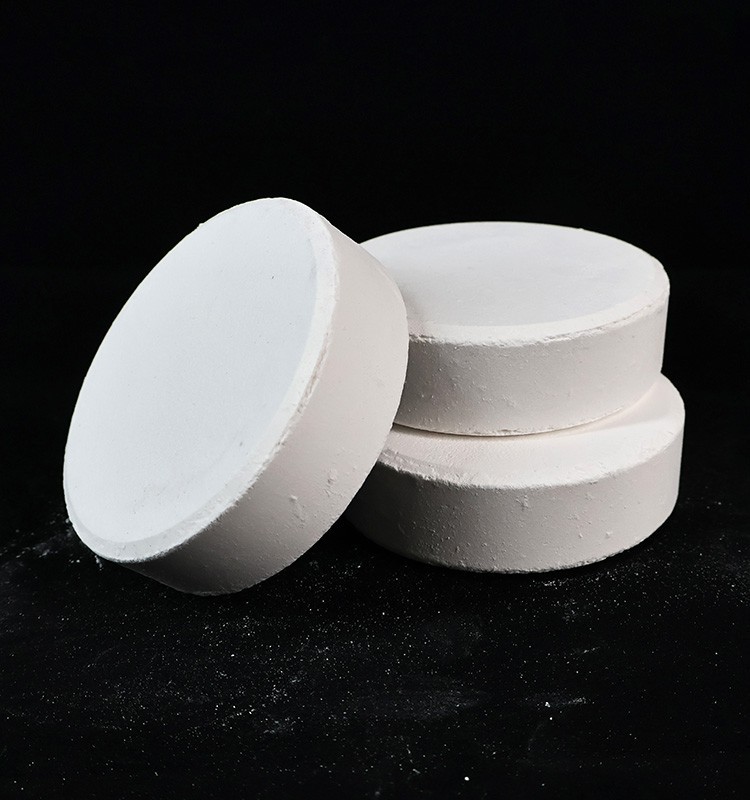
As a common groundwater source, well water is susceptible to external contamination due to its open access and lack of effective water quality protection measures. This is particularly true in rural areas and parts of cities with inadequate water supply systems, where well water quality may pose certain safety risks. Therefore, using calcium hypochlorite disinfection tablets to treat well water has become a crucial method for ensuring water safety.
The primary function of calcium hypochlorite disinfection tablets is to eliminate bacteria, viruses, fungi, and other microorganisms in well water. Well water often harbors various bacteria, including pathogens such as E. coli and Salmonella. These pathogens can spread through water, contaminate water sources, and even cause waterborne diseases. By releasing hypochlorous acid, calcium hypochlorite tablets rapidly and effectively eliminate these pathogenic microorganisms, preventing bacterial proliferation in well water and ensuring water sanitation.
Beyond bacteria, well water may contain chemical pollutants such as ammonia nitrogen, nitrates, and heavy metals. While calcium hypochlorite disinfection tablets primarily function as a disinfectant, they also react with certain chemicals in water during the disinfection process, providing a degree of purification. The strong oxidizing properties of calcium hypochlorite disinfection tablets can decompose some harmful substances, reducing their concentration in water and further improving water quality.
Odors and turbidity in well water typically originate from organic matter, algae, and bacterial metabolic byproducts. Calcium hypochlorite disinfection tablets effectively decompose organic pollutants through their strong oxidizing action, eliminating odors and purifying water color to make well water clearer and more transparent. Simultaneously, calcium hypochlorite inhibits the growth of algae and other microorganisms, preventing foul odors and turbidity in well water.
Treating well water with calcium hypochlorite disinfection tablets not only rapidly kills microorganisms but also sustains hypochlorous acid concentration in the water for an extended period, maintaining its sterilizing effect. For long-term well water use, regular addition of calcium hypochlorite disinfection tablets effectively prevents secondary water contamination, ensuring sustained water safety.
Calcium hypochlorite disinfection tablets are simple and effective to use. However, the dosage must be appropriately controlled based on factors such as water source quality and well water volume to avoid over- or under-treatment.
The dosage of calcium hypochlorite disinfection tablets generally depends on the water quality, microbial contamination level, and target disinfection concentration of the well water. Typically, the number of tablets required per use should be calculated based on the volume of well water. Generally, each tablet can treat a specific volume of water; refer to the product instructions for precise usage.
Calcium hypochlorite disinfection tablets must be dissolved in water before use. They can be added directly to water or placed in a dedicated dissolver. Wait until the tablets are fully dissolved before adding them to the well water. Stir during dissolution to ensure even distribution of the disinfectant and complete release of active ingredients.
To maintain long-term disinfection effectiveness in well water, periodic replenishment is required beyond the initial application. Regularly monitor water quality parameters, including microbial content and chlorine concentration, to ensure the disinfectant's efficacy. If water quality falls below standards, increase dosage appropriately or implement additional water treatment measures.
- High Efficacy: Calcium hypochlorite disinfection tablets exhibit strong bactericidal properties, effectively eliminating pathogenic bacteria and microorganisms in well water to ensure water safety.
- Convenient Usage: Tablet form facilitates storage, transportation, and application, avoiding drawbacks of liquid disinfectants such as volatility and corrosion.
- Sustained Effect: Once dissolved, the tablets continue to function, maintaining water quality over extended periods.
- Cost-Effectiveness: Calcium hypochlorite disinfection tablets are relatively inexpensive, making them suitable for widespread application, particularly in rural and remote areas.
- Significant Impact on Water Quality: Proper dosage is critical during use. Overuse may adversely affect water quality by causing excessively high residual chlorine levels.
- Limited applicability: Calcium hypochlorite disinfection tablets are primarily suitable for disinfecting household well water and small water bodies. For large-scale water treatment systems or complex water quality treatment, they may need to be combined with other treatment methods.
The application of calcium hypochlorite disinfection tablets in well water disinfection has become an important tool for ensuring well water quality safety due to their high efficiency, convenience, and cost-effectiveness. They not only effectively kill bacteria and remove harmful substances from water but also enhance the sanitary safety of water sources. However, proper dosage according to water quality conditions and product instructions remains essential during use to prevent excessive application that could lead to poor water quality.
With increasing public demands for water safety, calcium hypochlorite disinfection tablets hold broad application prospects in disinfection. They play an increasingly vital role in safeguarding public health and water source security.

 E-mail:jcl@jichanglong.com
 WhatsApp:+8618560709619
 Address:Block B, Polymer Materials Industry Innovation Park,No. 51, Lutai Avenue, High-tech Zone, Zibo City, Shandong Province
Our company specializes in vanadium inhibitors , dehumidification and drying block, calcium hypochlorite disinfectant tablet, polyacrylamide and other products. With over 20 years of experience, we offer quality assurance and wholesale prices.


