In modern life and industrial production, disinfection is a critical component for ensuring health and safety. Particularly in the current era marked by frequent public health incidents, heightened food safety requirements, and increased demand for industrial water treatment, trichloroisocyanuric acid disinfection tablets (TCCA) have gained widespread application across multiple sectors—including daily life, healthcare, industry, and agriculture—due to their highly effective, stable, and convenient sterilization properties. So, how should this potent disinfection product be used correctly? This article provides a detailed overview, covering its principles, characteristics, applications, specific usage methods, and precautions.
Trichloroisocyanuric acid (chemical formula C₃Cl₃N₃O₃) is a chlorine-based disinfectant. It is a highly effective, broad-spectrum, and stable chlorine-containing disinfection product widely used internationally. It exists in tablet, granular, or powder form, with tablets being the most common and convenient format.
Upon contact with water, trichloroisocyanuric acid disinfection tablets rapidly release hypochlorous acid (HOCl). This highly oxidizing substance effectively kills bacteria, fungi, viruses, spores, and algae. With a disinfection rate exceeding 99.9%, it is widely applied in drinking water disinfection, swimming pool sanitation, food processing equipment cleaning, environmental disinfection, and healthcare settings.
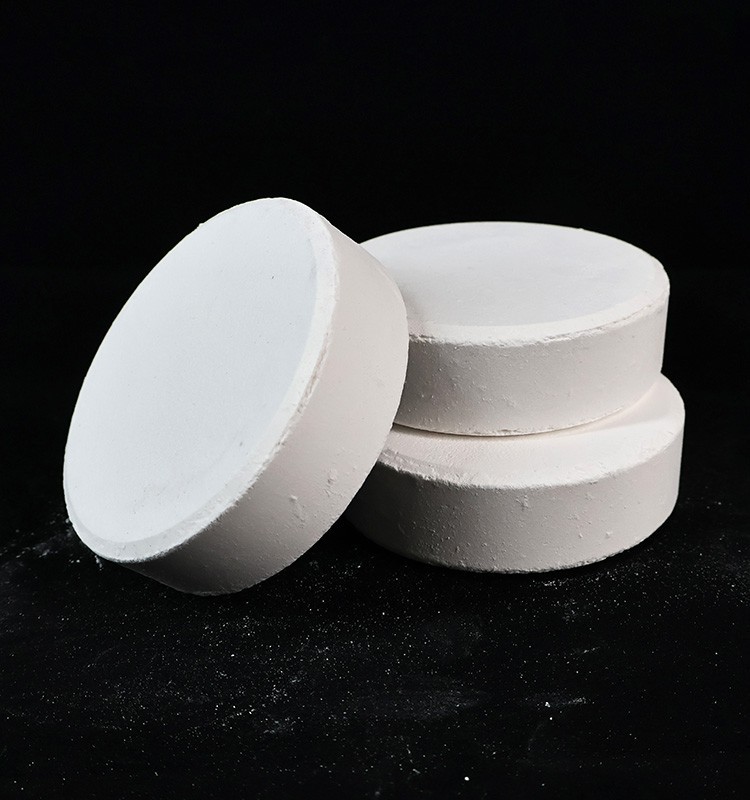
The released available chlorine content is high (typically over 90%), enabling rapid disinfection with long-lasting effects. Compared to traditional bleaching powder or sodium hypochlorite, it offers more stable disinfection performance while requiring lower dosages.
Tablet form facilitates portability, storage, and precise dosing. Resistant to moisture absorption and decomposition, it adapts to diverse environmental and climatic conditions with a typical shelf life exceeding two years.
Effectively eliminates multiple pathogenic microorganisms, including bacteria, viruses, fungi, spores, and algae, making it suitable for various scenarios and industries.
TCCA dissolves in water with virtually no precipitation. Its decomposition products are primarily carbon dioxide, nitrogen gas, and trace amounts of cyanuric acid, making it environmentally friendly with extremely low residue levels.
Compared to other disinfectants, trichloroisocyanuric acid requires lower dosages, offers prolonged efficacy, and has lower costs, making it a highly cost-effective disinfection solution.
Trichloroisocyanuric acid disinfection tablets are commonly used for sterilization and purification in rural drinking water projects, urban water supplies, and school/hospital water systems, effectively eliminating pathogenic bacteria in water.
Its long-lasting and stable bactericidal effect prevents algae growth, controls water pollution, and maintains clear, transparent water quality.
Includes disinfection of air, floors, walls, and equipment surfaces in public environments such as schools, hospitals, stations, shopping malls, hotels, restaurants, and gyms.
Sterilizes and cleans food machinery, processing workshops, tableware, and tools to prevent bacterial contamination of food.
Disinfects animal sheds, breeding ponds, and drinking water equipment to prevent the spread of animal diseases.
Suitable for routine disinfection of medical device surfaces, hospital wards, bathrooms, kitchens, and similar areas.
Usage methods and concentration ratios for trichloroisocyanuric acid disinfection tablets vary slightly depending on application scenarios. Below are reference ratios for common uses:
Usage Ratio: Add 1 gram of trichloroisocyanuric acid disinfection tablet (90% available chlorine content) per 1 ton of water.
Usage Method: Directly add tablets to the water storage container, stir thoroughly, and allow to settle for 30 minutes before use.
Precautions: Ensure water contains no significant organic contamination before use to prevent reduced disinfection efficacy.
Dosage: Add 2 grams of trichloroisocyanuric acid disinfection tablets per cubic meter of water, 1–2 times weekly.
Usage: Use an automatic chlorinator or dissolve tablets and evenly distribute throughout pool water.
Effect: Maintain residual chlorine concentration between 0.3–0.6 mg/L to ensure clean, odor-free water.
Solution Concentration: Prepare a 200 mg/L effective chlorine solution.
Usage: Immerse cleaned utensils or equipment for 5–10 minutes, then rinse thoroughly with clean water.
Solution Concentration: Prepare a 500–1000 mg/L active chlorine solution.
Usage: Apply via spraying, wiping, or mopping. Allow to sit for 10 minutes after disinfection, then wipe clean with water.
Drinking Water Disinfection: Add 1 gram of trichloroisocyanuric acid tablets per ton of water and stir thoroughly.
Site Disinfection: Prepare a 1000–2000 mg/L solution and spray onto surfaces of livestock sheds, breeding ponds, equipment, etc.
Medical Devices: Prepare a 500 mg/L solution, soak for 30 minutes, then remove and rinse.
Household Use: Prepare a 100–250 mg/L solution for wiping daily areas like kitchens, bathrooms, and floors.
Acidic environments cause rapid decomposition of trichloroisocyanuric acid, releasing chlorine gas that may cause irritation or poisoning risks.
Keep in a cool, well-ventilated, dry location away from direct sunlight and high temperatures to prevent moisture absorption or decomposition.
Wear protective gloves and a mask during handling to avoid direct skin or eye contact.
Trichloroisocyanuric acid is highly oxidizing. Do not store with flammable, explosive, or organic substances to prevent hazardous reactions.
Excessive use wastes the chemical and may cause excess residual chlorine in water, irritating skin or respiratory tracts.
Use opened packages as soon as possible. Seal remaining product to prevent moisture absorption and decomposition caused by atmospheric humidity.
Trichloroisocyanuric acid: Over 90%
Sodium hypochlorite: 10%–12%
Bleaching powder: 30%–35%
Trichloroisocyanuric acid: Excellent, resistant to decomposition
Sodium hypochlorite: Prone to decomposition
Bleaching powder: Prone to moisture absorption and caking
Trichloroisocyanuric acid: Long (over 2 years)
Sodium hypochlorite: Short (several months)
Bleaching powder: Moderate
Trichloroisocyanuric acid: Solid tablets, portable
Sodium hypochlorite: Liquid, requires fresh preparation
Bleaching powder: Powder form, difficult to control dosage
Trichloroisocyanuric acid: Strong, long-lasting
Sodium hypochlorite: Moderate
Bleaching powder: Moderate
Trichloroisocyanuric acid: No heavy metal residues
Sodium hypochlorite: Significant residues
Bleaching powder: Produces sediment
Compared to traditional disinfectants like bleaching powder or sodium hypochlorite, TCCA offers superior chlorine content, stability, storage performance, and ease of use:
It is evident that trichloroisocyanuric acid offers superior advantages in both disinfection efficacy and cost-effectiveness, making it one of the preferred disinfectants in water treatment and public health applications.
Trichloroisocyanuric acid disinfection tablets, renowned for their high efficiency, stability, safety, and cost-effectiveness, have become one of the most popular broad-spectrum disinfection products in contemporary society. They play an irreplaceable role across various sectors, including drinking water supply, public environments, industrial processes, healthcare, and food processing. However, it is crucial to note that all disinfectants must be used scientifically, with proper dilution ratios and standardized procedures. Only by mastering the correct usage methods can both effective sterilization and the safety of personnel and the environment be ensured.
In the future, with the continuous advancement of disinfection technology and the increasing awareness of health, the application of trichloroisocyanuric acid disinfection tablets will become even more widespread, and their role in public health and environmental protection will become increasingly prominent.

 E-mail:jcl@jichanglong.com
 WhatsApp:+8618560709619
 Address:Block B, Polymer Materials Industry Innovation Park,No. 51, Lutai Avenue, High-tech Zone, Zibo City, Shandong Province
Our company specializes in vanadium inhibitors , dehumidification and drying block, calcium hypochlorite disinfectant tablet, polyacrylamide and other products. With over 20 years of experience, we offer quality assurance and wholesale prices.


