In the modern chemical and water treatment industries, “acrylamide” and “polyacrylamide” are two frequently mentioned critical chemical materials. Though their names are similar and their origins related, they exhibit significant differences in molecular structure, physicochemical properties, applications, and safety aspects. Many individuals often confuse the two when learning about or procuring them. This article systematically analyzes their distinctions and connections from scientific and application perspectives to help readers accurately understand these two critical materials.
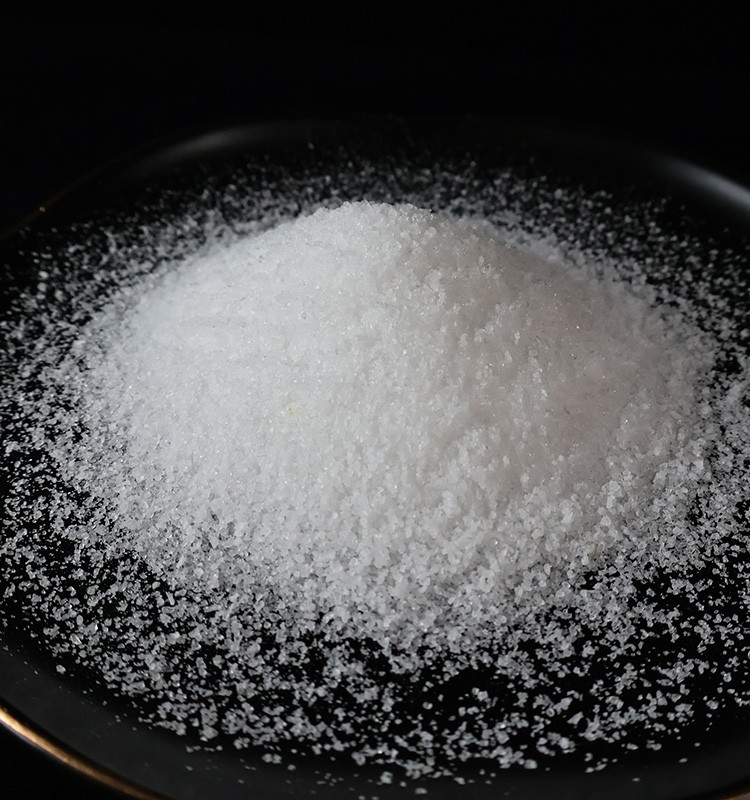
Acrylamide (chemical formula: C₃H₅NO) is a small-molecule organic compound appearing as a white crystalline solid. It is highly soluble in water, ethanol, and acetone. Its molecular structure contains a double bond (C=C) and an amide group (–CONH₂), endowing it with high chemical reactivity.
Industrially, acrylamide is primarily produced through the hydration of acrylonitrile. Its exceptionally high chemical reactivity makes it a vital raw material for numerous polymeric compounds. Due to its active double bond, acrylamide undergoes free-radical polymerization to form long-chain polymers—polyacrylamide.
- Basic Properties of Acrylamide Appearance: White crystals or powder Melting Point: 84–85°C Solubility: Soluble in water, ethanol, acetone Toxicity: Exhibits neurotoxicity; direct contact and inhalation should be avoided Stability: Stable at room temperature but prone to polymerization under high temperatures or light exposure
Due to the toxicity of its monomer, residual acrylamide must be strictly controlled during use, particularly in high-safety-demand sectors like food packaging and water treatment.
Polyacrylamide (abbreviated as PAM) is a high-molecular-weight polymer produced by the polymerization of acrylamide monomers. Its chemical structure consists of repeating [-CH₂–CH(CONH₂)-] units and can be classified into various types including nonionic, anionic, cationic, and amphoteric.
Polyacrylamide appears as a white powder or granules and dissolves in water to form a transparent, viscous solution. It is non-toxic, odorless, and highly stable, finding extensive applications in wastewater treatment, papermaking, oil extraction, textile printing and dyeing, building materials, and other fields.
- Key Characteristics of Polyacrylamide
High molecular weight: Molecular weight can reach millions to tens of millions;
Water solubility: Forms high-viscosity solutions with excellent flocculation properties;
High stability: Excellent resistance to acids, alkalis, and salts; Non-toxic and environmentally friendly: Post-polymerization residual acrylamide monomer is extremely low, posing no harm to humans.
The most prominent characteristic of polyacrylamide is its flocculation effect—it adsorbs suspended particles and promotes their aggregation and sedimentation, making it an irreplaceable key material in water treatment.
- Polyacrylamide
Polyacrylamide is a linear polymeric macromolecule primarily available in powder or gel form. Based on average molecular weight, it is categorized into low molecular weight (below 1 million), medium molecular weight (2 to 4 million), and high molecular weight (over 7 million). By structure, it is classified as nonionic, anionic, or cationic.
- Acrylamide
Acrylamide is a white crystalline chemical substance serving as the raw material for producing polyacrylamide. Polyacrylamide is primarily used in water purification, pulp processing, and pipeline internal coatings. Starchy foods are prone to generating acrylamide when cooked at high temperatures (above 120°C).
- Polyacrylamide
Polyacrylamide is a water-soluble linear polymer formed by the free-radical polymerization of acrylamide (AM) monomers. It exhibits excellent flocculation properties and reduces friction resistance between liquids. Classified by ionic characteristics, it includes nonionic, anionic, cationic, and amphoteric types. Polyacrylamide is insoluble in most organic solvents, such as methanol, ethanol, acetone, diethyl ether, aliphatic hydrocarbons, and aromatic hydrocarbons, with the exception of a few polar organic solvents like acetic acid, acrylic acid, chloroacetic acid, ethylene glycol, glycerol, molten urea, and formamide. However, its solubility in these organic solvents is limited and often requires heating, otherwise it has little practical application value.
- Acrylamide
Polyacrylamide appears as a white powder with a density of 1.32 g/cm³ (at 23°C), a glass transition temperature of 188°C, and a softening temperature approaching 210°C. When dried by conventional methods, it contains trace amounts of water and readily absorbs moisture from the environment when dry. Homopolymers separated by freeze-drying form a white, soft, non-crystalline solid. However, when precipitated from solution and dried, it forms a glassy, partially transparent solid. Fully dried polyacrylamide (PAM) is a brittle white solid. Commercially available polyacrylamide is typically dried under moderate conditions, usually containing 5% to 15% moisture. High-molecular-weight membranes cast onto glass plates are transparent, hard, and brittle solids.
Polyacrylamide
- Used in the papermaking industry to enhance retention rates of fillers, pigments, etc., reducing raw material loss and environmental pollution.
- Used in the petroleum industry for oil extraction, drilling mud, and waste mud treatment. Prevents water ingress, reduces friction resistance, improves recovery rates, and is widely applied in tertiary oil recovery.
- Used as a textile sizing agent, providing stable slurry properties, minimal slurry loss, low yarn breakage rates, and smooth fabric surfaces.
Acrylamide
Used in oilfield water injection wells to adjust water absorption profiles. Mixed with initiators and injected into high-permeability zones of injection wells, it polymerizes into high-viscosity polymers.
Renowned as the “universal industrial additive” for its exceptional adsorption and flocculation properties.
(1) Water Treatment: In wastewater purification, PAM effectively flocculates suspended particles and accelerates sedimentation, widely applied in industrial effluent, municipal sewage, and drinking water purification systems.
- Anionic PAM: Used for river, coal mine, and mineral processing wastewater treatment;
- Cationic PAM: Suitable for organic wastewater from dyeing, papermaking, and domestic sewage.
(2) Papermaking Industry: Serves as a strength enhancer and retention aid, improving paper strength and basis weight stability.
(3) Petroleum Extraction: Used as an oil displacement agent and drilling fluid modifier to enhance fluid properties and reduce friction resistance.
(4) Agriculture and Soil Improvement: PAM enhances soil water retention, reduces evaporation, and increases fertilizer utilization.
(5) Construction and Tunnel Engineering: Used as grouting material to improve foundation stability and impermeability.
Across industries, polyacrylamide not only boosts production efficiency but also provides reliable support for energy conservation and environmental protection.
Acrylamide possesses neurotoxicity and potential carcinogenic risks. Human inhalation or contact may cause health hazards, leading to stringent international regulations governing its storage, transportation, and handling.
Polyacrylamide, however, exhibits stable chemical properties after polymerization. It is non-volatile and non-toxic, recognized as a safe and harmless polymeric material. Provided residual monomers are controlled, it can be safely used in environmental water treatment and food-grade pulp applications.
Additionally, polyacrylamide is biodegradable, posing minimal impact on ecosystems, positioning it as a key direction for future green chemistry development.
The relationship between acrylamide and polyacrylamide mirrors the contrast between “raw material and product, reactivity and stability, risk and safety.” Acrylamide serves as the starting point for chemical reactions, while polyacrylamide represents the endpoint of industrial applications. The former, with its high reactivity, forms a crucial foundation for chemical synthesis, while the latter leverages its exceptional properties to serve environmental protection, resource conservation, and diverse industrial production needs.
Against the backdrop of the “dual carbon” goals and green manufacturing, safe, environmentally friendly, and highly efficient polyacrylamide materials will continue to play an irreplaceable role. It is not only an “invisible enabler” for industry but also a key material driving clean production and sustainable development.
Accurately understanding the differences between the two facilitates scientific material selection and standardized operations in production and application, thereby avoiding potential safety hazards.

 E-mail:jcl@jichanglong.com
 WhatsApp:+8618560709619
 Address:Block B, Polymer Materials Industry Innovation Park,No. 51, Lutai Avenue, High-tech Zone, Zibo City, Shandong Province
Our company specializes in vanadium inhibitors , dehumidification and drying block, calcium hypochlorite disinfectant tablet, polyacrylamide and other products. With over 20 years of experience, we offer quality assurance and wholesale prices.


