With the growing demand for public health management, drinking water treatment, swimming pool maintenance, and industrial water treatment, chlorine-based disinfectants play a vital role in both routine hygiene management and professional disinfection. Calcium hypochlorite is a common raw material for chlorine-based disinfectants; it exerts oxidizing and disinfecting effects by releasing available chlorine, helping to control various microorganisms in water. Disinfectant tablets formulated primarily with calcium hypochlorite are typically used in scenarios requiring precise dosing, easy storage, or convenient transport. Their specific scope of application depends on the product formulation, available chlorine content, dosage form design, and relevant regulatory requirements.
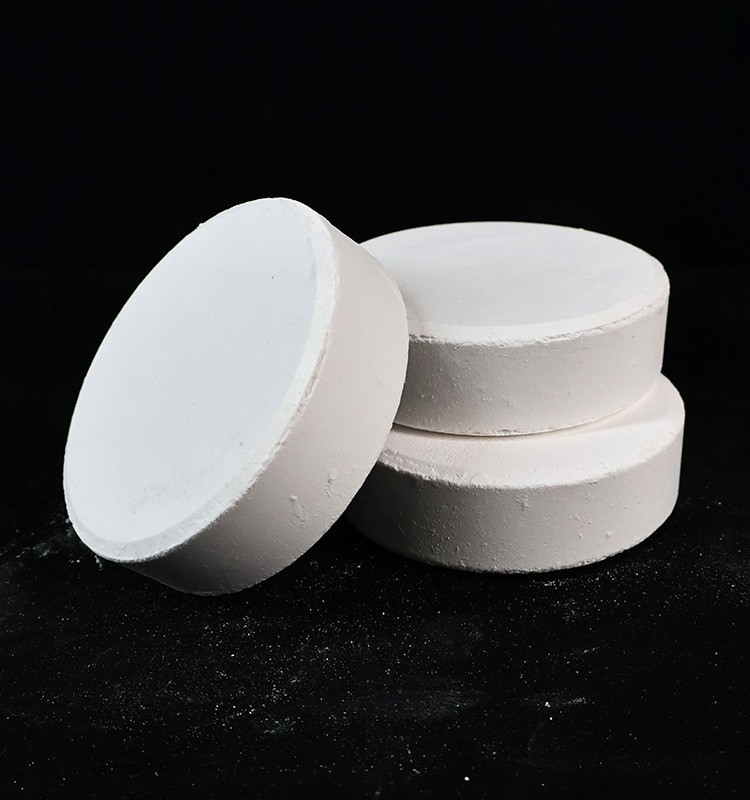
Calcium hypochlorite is an inorganic chlorine-containing compound with the chemical formula Ca(OCl)₂. It typically appears as a white or light-colored solid and possesses strong oxidizing properties. Because it can release available chlorine under appropriate conditions, it is used in various water treatment and disinfection products.
Calcium hypochlorite disinfectant tablets are products in which the active disinfecting ingredients are compressed into tablet form. Compared to powders or granules, tablets offer advantages in unit packaging, storage management, and precise dosing for certain applications. However, tablets from different manufacturers may vary significantly in composition, dissolution rate, available chlorine content, and intended use; therefore, their suitability cannot be determined solely by appearance.
It is important to note that not all calcium hypochlorite tablets are suitable for disinfecting drinking water, food-contact surfaces, or other specific applications. When purchasing, one should verify the product label, active ingredients, intended use, approval or registration information, and technical data provided by the manufacturer.
The effectiveness of calcium hypochlorite disinfectant tablets relies on the release of available chlorine. When the product enters a suitable aqueous environment, it dissolves and undergoes chemical reactions to form chlorine-containing substances with oxidizing capabilities. Among these, hypochlorous acid plays a crucial role in bactericidal action under many water disinfection conditions. Hypochlorous acid acts on the cellular structures, proteins, and other vital components of microorganisms, thereby disrupting their normal physiological activities and reducing or inhibiting their activity. Actual disinfection efficacy is influenced by various factors, including available chlorine concentration, contact time, water temperature, pH value, turbidity, and organic matter content.
For instance, when significant amounts of organic matter are present in the water, a portion of the available chlorine may react with these substances, reducing the amount of chlorine available for disinfection. Consequently, even when using the same type of product, disinfection outcomes may vary depending on water quality and environmental conditions.
Subject to compliance with relevant regulations, product registrations, and water quality standards, specific calcium hypochlorite products may be used for drinking water disinfection. The primary objective is to mitigate risks posed by microorganisms of public health significance in treated water and to help ensure the safety of the water supply.
In centralized water supply systems, disinfection is typically one component of the comprehensive water treatment process. Source water may undergo treatments such as coagulation, sedimentation, and filtration before disinfection is applied based on water quality and process requirements. Disinfection efficacy depends not only on the chemical agent itself but also on source water conditions, the operation of treatment facilities, and water quality monitoring results. For scenarios such as household water storage, emergency water supplies, or water provision in remote areas, products explicitly labeled for drinking water treatment must be used, and official guidelines and product instructions strictly followed. Disinfection tablets intended for swimming pools, industrial circulating water, or other non-potable applications cannot serve as direct substitutes for products designed for drinking water disinfection.
Swimming pools are a common setting for the use of chlorine-based disinfectants. Sweat, skin flakes, and other organic matter introduced by swimmers, as well as contaminants from the external environment, can affect the sanitary quality of the pool water. Proper disinfection helps control certain bacteria and other microorganisms, thereby reducing the risk of waterborne infections.
Calcium hypochlorite products can serve as a chlorine source in certain swimming pool disinfection regimens, helping to maintain the necessary disinfection capacity of the pool water. However, managing swimming pool water quality involves more than just adding disinfectants; it also requires monitoring pH levels, free chlorine levels, water circulation and filtration efficiency, and contamination loads. When selecting products, verify their suitability for the specific pool system and manage usage according to product labels, water quality test results, and local regulations. Since different products vary in available chlorine content and dissolution characteristics, dosing instructions for one product cannot be directly applied to another.
In certain industrial production systems, water is used for cooling, cleaning, or other process steps. If microorganisms proliferate within the system, biofilms may form, impairing heat exchange efficiency, pipeline operation, and equipment hygiene.
Calcium hypochlorite products that meet specific application requirements can be used in certain industrial water treatment programs to help control microbial growth. However, given the significant variations in water composition, temperature, pH, and equipment materials across industrial systems, disinfection strategies must be evaluated in the context of the specific process. For large-scale circulating water systems, factors such as corrosion risk, material compatibility, discharge requirements, and interactions with other water treatment chemicals must also be considered. Enterprises typically need to develop management plans based on water quality testing and system operational conditions, rather than relying solely on disinfectants for water quality control.
In situations involving natural disasters, temporary water supply needs, or damage to infrastructure, ensuring a safe water supply can become a critical public health priority. Chlorine-based disinfection products that meet drinking water standards may be included in approved emergency water treatment protocols. However, emergency use requires strict adherence to product specifications and official operational guidelines. Disinfection tablets of unknown origin, unclear intended use, or lacking instructions for drinking water application must not be used to treat drinking water; furthermore, the effectiveness of the treatment should not be judged solely by the water's odor or appearance. When necessary, professional agencies should test the water quality to confirm the safety of the supply.
Provided that product label instructions are followed, chlorine-based disinfectants may be used to disinfect certain chlorine-resistant hard surfaces—such as floors, workbenches, or other non-porous surfaces in specific settings. The purpose of disinfection is to reduce hygiene risks associated with microbial contamination of surfaces. However, calcium hypochlorite tablets are not necessarily suitable for direct application to all surfaces. In practice, one should verify that the product is intended for the specific application and check the prescribed dilution methods, contact times, and usage limitations. For food-contact surfaces, specific hygiene requirements must also be observed, and post-treatment steps should be taken as directed by the product label if necessary.
Restrooms, drainage areas, and other damp environments within public facilities may require targeted cleaning and disinfection. It is important to distinguish between cleaning and disinfection: cleaning primarily removes dirt and organic matter, whereas disinfection aims to reduce microbial risks. Provided that suitable products are used and correct procedures are followed, chlorine-based disinfectants can serve as part of hygiene management protocols. For metals prone to corrosion, fabrics, coatings, or other sensitive materials, product compatibility should be confirmed beforehand to prevent equipment damage or surface discoloration resulting from improper use.
Facilities such as healthcare centers, laboratories, and food processing plants—which have stringent hygiene control requirements—must select disinfection methods based on risk levels, industry standards, and relevant regulations. Calcium hypochlorite disinfection tablets should not be assumed to be a universal solution suitable for all professional environments. In these settings, priority should be given to products with appropriate approvals, registrations, or validation data, and application should be carried out by trained personnel following standard operating procedures. For tasks involving high-risk pathogens or specific types of contamination, treatment protocols recognized by competent authorities or professional bodies must be adopted.
(1) The tablet form facilitates unit packaging and inventory management. For facilities requiring adherence to strict usage procedures, standardized packaging helps staff verify product information and minimizes management issues caused by damaged packaging or unclear labeling.
(2) Certain tablet products offer advantages in storage and transport. Compared to some liquid disinfectants, solid products may provide greater convenience regarding packaging and logistics. However, calcium hypochlorite remains an oxidizing chemical; its transportation, storage, and management must comply with applicable hazardous materials regulations and the requirements of the product's Safety Data Sheet (SDS). Its hazardous properties must not be overlooked simply because the product comes in tablet form.
(3) The product's available chlorine content and dissolution characteristics may influence management requirements during use. For enterprises requiring long-term procurement, consistent product quality, comprehensive technical documentation, clear batch information, and reliable supplier service are equally important.
Before purchasing, check the product label, SDS, and technical specifications, paying particular attention to available chlorine content, scope of application, storage conditions, usage limitations, and operating requirements provided by the manufacturer. If the product is intended for use in drinking water, swimming pool water, or food-related environments, verify its compliance with the relevant regulations and standards for those specific uses. Industrial-grade products should not be used for drinking water treatment or in other strictly regulated scenarios without prior verification.
Calcium hypochlorite must not be indiscriminately mixed with acids, ammonia-based substances, organic materials, or other incompatible chemicals, as this could generate toxic gases, trigger violent reactions, or pose a fire risk. Do not mix different types of swimming pool disinfectants. Follow the operating procedures specified in the product instructions and ensure the handling area has adequate ventilation and safety protection measures. In the event of a spill or abnormal reaction, handle the situation according to the SDS and on-site emergency procedures; untrained personnel should not attempt to manage the incident themselves.
When performing professional operations, select appropriate eye, hand, and other personal protective equipment based on the product's SDS and risk assessment. Avoid contact between the product (dust or solution) and the eyes or skin, and avoid inhaling the dust. In the event of accidental contact, take immediate action according to the first-aid instructions in the SDS and seek professional medical assistance if necessary.
Calcium hypochlorite must be stored in a suitable environment as specified on the product label; generally, this requires keeping the product dry, cool, and well-ventilated, while ensuring it is kept away from heat sources, ignition sources, acids, combustible materials, and other incompatible substances. The product should retain its original labeling and packaging information, and proper measures for sealing, segregation, and inventory management must be implemented in accordance with regulations. Products that have been exposed to moisture, have damaged packaging, or exhibit abnormal conditions should not be used without a professional assessment.
In water treatment applications, the effectiveness of the disinfectant cannot be judged solely by the dosage. Personnel should monitor relevant water quality parameters based on the specific application—such as free chlorine, pH levels, and other prescribed parameters where applicable. For drinking water and swimming pool water, local health standards and testing requirements must also be followed. Compliance with water quality standards should be determined by comparing actual test results against applicable standards; conclusions should not be drawn based merely on odor, color, or subjective perception.
The primary purpose of calcium hypochlorite disinfection tablets—when used in accordance with product specifications and applicable regulations—is to help control microbial risks in water bodies or specific environments through the release of available chlorine. Applications include certain drinking water treatment processes, swimming pool disinfection, industrial water treatment, emergency water supply, and validated surface disinfection tasks. Requirements regarding product composition, available chlorine content, usage conditions, and regulatory compliance vary depending on the specific application. Therefore, when purchasing and using the product, it is essential to carefully verify product labels and technical documentation, adhere to relevant safety operating procedures, and manage usage based on actual water quality or environmental conditions.

 E-mail:jcl@jichanglong.com
 WhatsApp:+8618560709619
 Address:Block B, Polymer Materials Industry Innovation Park,No. 51, Lutai Avenue, High-tech Zone, Zibo City, Shandong Province
Our company specializes in vanadium inhibitors , dehumidification and drying block, calcium hypochlorite disinfectant tablet, polyacrylamide and other products. With over 20 years of experience, we offer quality assurance and wholesale prices.


