In industrial production and daily life,the excessive production of foam often leads to lower efficiency,lower product quality and even potential safety hazards.Defoaming agents,as chemical additives specially used to eliminate or inhibit foam,have become the core tool to solve foam problems by virtue of their unique physical and chemical properties.This article will systematically analyze the typical types and industry application logic of defoaming agents from three dimensions:chemical composition,application scenarios,and development trends.
1.Chemical composition classification:iterative upgrade from traditional to new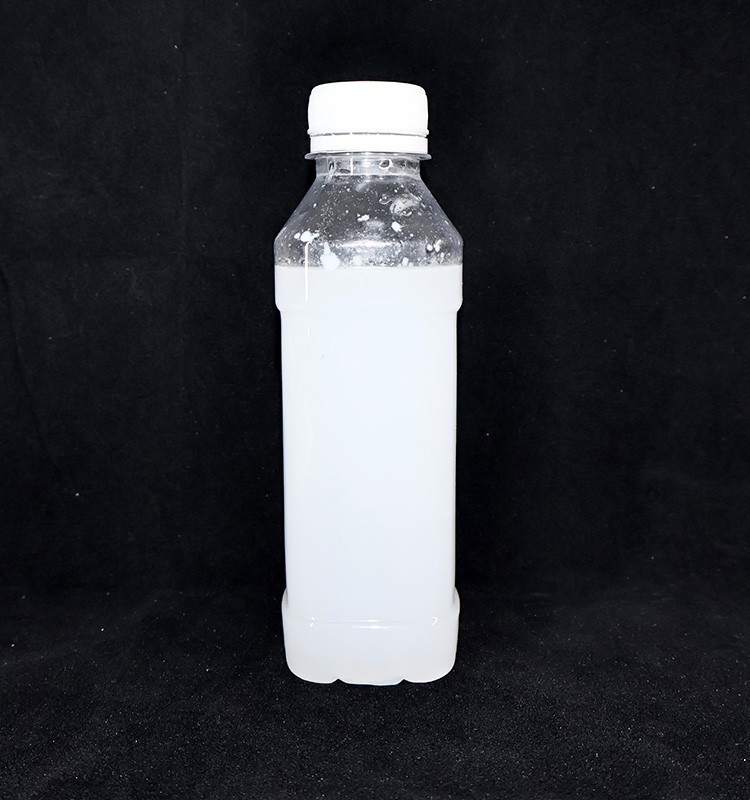
The chemical structure of defoaming agents directly affects their defoaming efficiency,compatibility,and environmental adaptability.Currently,mainstream products can be divided into four categories:
1.Non silicone defoaming agents:the"basic guardians"of traditional industries
Non silicone defoaming agents with mineral oil,fatty acid esters,and amide compounds as core components have long dominated traditional industrial markets such as papermaking and textiles due to their low cost and strong environmental friendliness.Its mechanism is based on the"local surface tension difference"-when defoaming agent particles enter the foam bimolecular film,the surface tension in this area will be significantly reduced,so that the surrounding high tension area will pull the low tension area,leading to the collapse of the foam.For example,in the process of papermaking and pulping,the defoaming agent composed of olefin solvent and lipophilic surfactant can effectively deal with the foam problem in alkaline environment,but it should be noted that its foam inhibition ability is weak and needs to be supplemented frequently.
2.Polyether defoaming agents:"weather resistant experts"in high-temperature and strong acid-base environments
Polyether defoaming agents,represented by ethylene oxide propylene oxide block copolymers,achieve cloud point controllability by adjusting the ratio of hydrophilic and hydrophobic groups in the molecular chain.When the temperature rises to the cloud point,the polyether changes from water solubility to oil solubility,which destroys the stability of foam film.This type of defoaming agent performs outstandingly in the cleaning,fermentation,and petrochemical industries.For example,in the ethylene glycol drying process,it can withstand a high temperature environment of 150℃and has excellent stability against strong acids and bases.However,the defoaming rate of polyether defoaming agents is relatively low,and they need to be combined with silicone defoaming agents to improve their overall performance.
3.Organosilicon defoaming agents:versatile players with broad-spectrum applications
Organic silicone defoaming agents based on polydimethylsiloxane(silicone oil)have become the preferred choice in high-end fields such as food,medicine,and coatings due to their extremely low surface tension(20-21mN/m)and excellent chemical inertness.Its mechanism includes the double effect of"spreading displacement":silicone oil droplets spread rapidly on the surface of foam,displace surfactant molecules in the film layer,and reduce the liquid film thickness to the critical instability point.For example,in the process of food fermentation,silicone oil defoaming agent can reduce the height of foam by more than 80%without affecting the microbial activity.However,it should be noted that excessive use may lead to silicon spot defects in the product.
4.Polyether modified silicone defoaming agent:an innovative benchmark for performance fusion
By combining polyether segments with siloxane segments through silicon oxygen carbon bonds,this type of defoaming agent combines the cloud point characteristics of polyether with the low surface tension advantages of silicone oil.The polyether segments in its molecular structure provide water solubility,while the siloxane segments enhance defoaming activity,forming a"temperature responsive"defoaming system.In the high-temperature dyeing process of polyester,modified silicone defoaming agent can continuously suppress foaming at 130℃and has excellent compatibility with dye molecules,avoiding color spots on the fabric.According to market research institutions,the global market size of polyether modified silicone defoaming agents has exceeded 1.2 billion US dollars in 2024,with a compound annual growth rate of 8.3%.
2.Application scenario analysis:from micro mechanisms to macro benefits
The selection of defoaming agent requires comprehensive consideration of factors such as system pH value,temperature,shear force and foam type.The performance requirements of defoaming agent in different industries are significantly different:
1.Waterborne coatings:Balancing gloss and defoaming techniques
In the production of water-based coatings,the production of foam will lead to pinholes,shrinkage cavities and other defects on the surface of the film.Although traditional mineral oil defoaming agents are low-cost,they are prone to causing coating loss of gloss;Although silicone defoaming agents have high defoaming efficiency,they may cause shrinkage.Polyether modified silicone defoaming agent can maintain the glossiness of the coating while defoaming by adjusting the ratio of polyether to silicon in the molecule.The experimental data shows that adding 0.3%modified silicon defoaming agent to the emulsion paint formula can reduce the volume of foam by 92%,and the 60°gloss retention rate of the film can reach more than 95%.
2.Fermentation industry:the"silent guardian"of microbial activity
In the fermentation process of antibiotics,amino acids,etc.,the excessive accumulation of foam will reduce the loading coefficient,hinder oxygen transmission,and even lead to the risk of infection.Organic silicon defoaming agents have become the mainstream choice for defoaming fermentation tanks due to their strong chemical inertness and long-lasting foam inhibition.But the dosage needs to be strictly controlled-when the concentration of silicone oil exceeds 0.05%,it may form an oil film covering the surface of the bacterial cells,inhibiting the secretion of metabolites.The new polyether modified silicone defoaming agent can form uniformly dispersed particles in the fermentation broth by introducing hydrophilic polyether segments,ensuring defoaming efficiency while avoiding toxic effects on microorganisms.
3.Oil extraction:an"efficiency accelerator"for oil and gas separation
In natural gas desulfurization,crude oil dehydration and other processes,foam will reduce the processing capacity of separation equipment and increase energy consumption.For high-temperature and high-pressure environments,heat-resistant organic silicon defoaming agents(such as methyl phenyl silicone oil)can maintain activity at 200℃,and the phenyl structure in their molecules enhances thermal stability.In the ethylene glycol drying tower,adding 0.1%silicone oil defoaming agent can reduce the thickness of foam layer from 50 cm to less than 5 cm,and the separation efficiency is increased by 40%.
3.Development Trend:Dual Drive of Greening and Intelligence
With the tightening of environmental regulations and the promotion of Industry 4.0,the defoaming agent industry is undergoing two major changes:
1.Greening:from"end of pipe treatment"to"source design"
Biobased defoaming agents have become a research and development hotspot,such as polyether defoaming agents made from methyl ricinoleate,which have a biodegradation rate of over 90%and meet the requirements of the EU REACH regulation.In addition,inorganic defoaming agents such as nano silica and graphene have been increasingly used in the fields of food and medicine due to their non-toxic and high-temperature resistant characteristics.
2.Intelligence:From"Experience Formula"to"Data Driven"
With the help of AI algorithms and high-throughput experimental platforms,the design cycle of defoaming agent formulations has been shortened from the traditional 6-12 months to 2-3 months.For example,the intelligent defoaming agent screening system developed by a certain enterprise can automatically match the optimal defoaming agent type and dosage by inputting system parameters(pH,temperature,viscosity,etc.),reducing trial and error costs by 70%.
The evolution history of defoaming agents from traditional non silicone to new polyether modified silicone,from single defoaming function to intelligent response system,reflects the eternal pursuit of efficiency and sustainability in the chemical industry.In the future,with the deep integration of materials science and digital technology,defoaming agents will demonstrate their"invisible value"in more emerging fields such as lithium battery electrolytes and 3D printing materials,providing key support for the efficient operation of industrial production.

 E-mail:jcl@jichanglong.com
 WhatsApp:+8618560709619
 Address:Block B, Polymer Materials Industry Innovation Park,No. 51, Lutai Avenue, High-tech Zone, Zibo City, Shandong Province


