Defoaming agents,also known as antifoams,are chemical additives that can inhibit,reduce and eliminate foam generated during production or application.Its core function is to quickly destroy the stability of the formed foam and prevent the foam from being generated again,so as to ensure the smooth process and improve product quality and production efficiency.As a functional additive,defoaming agents play an indispensable role in industrial production.
1.Formation and stability mechanism of foam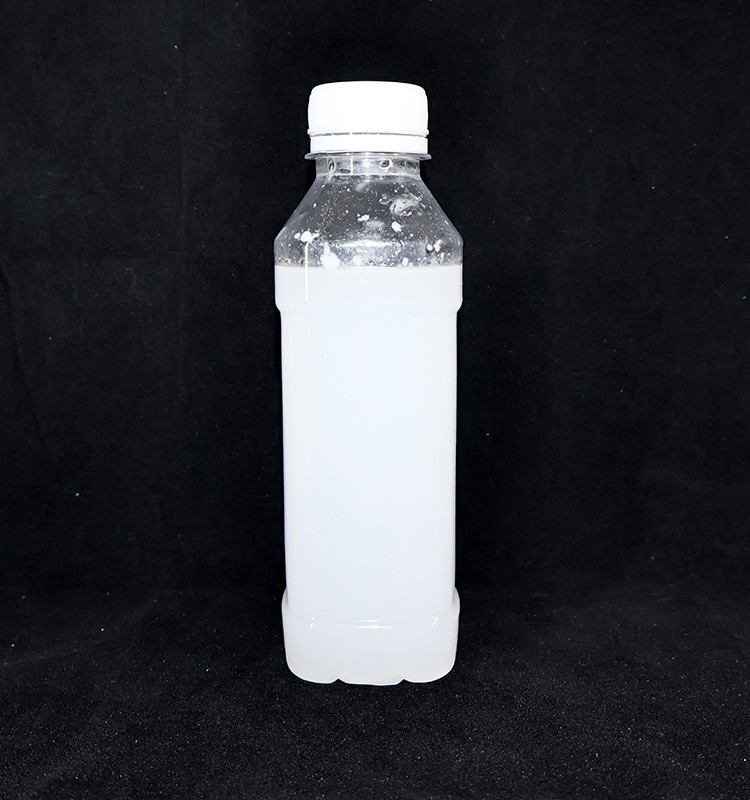
To deeply understand the role of defoaming agents,we must first understand the essence of foam.Foam is a gas-liquid dispersion system formed by a large amount of gas dispersed in a small amount of liquid.Bubbles are separated by an extremely thin liquid film.The formation and stability of foam mainly depend on the following factors:
1.The presence of surfactants:Surfactants,proteins,polymers,and other substances present in the system can reduce the surface tension of liquids,making it easier for gases to be enveloped and dispersed,forming bubbles.
2.Discharge and stability of liquid film:the liquid film of foam will discharge due to gravity and gradually become thinner.However,the surfactant molecules form a directional adsorption layer on both sides of the liquid film,which produces the so-called"Marangoni effect".When the liquid film thins locally,the surface tension at this place increases,which will drive the surrounding liquid to return to the thin area for repair,thus maintaining the stability of the foam.
3.Surface viscoelasticity:Some polymer substances can endow the liquid film with a certain mechanical strength,making it like an elastic film,resistant to external disturbances and rupture.
4.Electric double-layer repulsion:If the active agent ions on the surface of the liquid film have the same charge,bubbles will be difficult to merge or rupture when they approach each other due to electrical repulsion.
It is the combined effect of these physical and chemical mechanisms that makes foam extremely stable in many industrial processes,which requires the use of defoaming agents to intervene and destroy it.
2.Composition and classification of defoaming agents
Defoaming agents are not a single substance,but a composite system composed of multiple functional components.Its core components include:
1.Active ingredient:This is the core substance for the effectiveness of defoaming agents,usually a hydrophobic substance that is insoluble or difficult to dissolve in foaming systems.Common active ingredients include:
-Mineral oil:As a carrier,it has a low cost and is suitable for many general applications.
-Polysiloxane:such as dimethyl silicone oil,modified silicone oil,etc.This type of substance has extremely low surface tension,strong spreading ability,excellent defoaming and anti foaming effects,and is one of the most widely used types of defoaming agents.
-Polyether class:such as polyoxypropylene oxide(GP type).Their solubility in water varies with temperature,and their"reverse solubility"can be used to achieve automatic control of defoaming and anti foaming functions.
-Fatty alcohols,amides,etc.:specialized defoaming agents used in specific systems.
2.Extender:This kind of material can help active ingredients spread and penetrate more quickly on the foam liquid membrane,thus accelerating the rupture of foam,such as hydrophobic silica(white carbon black).
3.Carrier:As a dispersing medium for active ingredients and expansion agents,usually water or organic solvents,its function is to facilitate the storage,transportation,and uniform dispersion of defoaming agents in foaming systems.
4.Emulsifier/stabilizer:for lotion defoaming agent,emulsifier shall be added to ensure that active ingredients can be stably dispersed in water to form a uniform lotion and prevent stratification.
According to its shape and action characteristics,defoaming agents can be divided into many types,such as oil-based,paste,solid powder,lotion,etc.Among them,lotion defoaming agent is widely used because of its easy dispersion and water-soluble system.
3.The mechanism of action of defoaming agents
The function of defoaming agents is a complex dynamic process,and the main mechanism can be summarized into the following steps:
1.Enter the foam liquid film:small drops of defoaming agent must be able to enter the foam liquid film first.This requires defoaming agents to have lower surface tension,allowing them to spontaneously infiltrate the liquid film interface.
2.Spread on the liquid film:After entering the liquid film,the defoaming agent droplets will quickly spread on the surface of the liquid film,forming a monolayer.This spreading process will take away a portion of the liquid on the surface of the liquid film,causing the liquid film to instantly thin locally.
3.Damage to film stability:the spreading behavior of defoaming agent will disturb and replace the surfactant molecular layer of the original stable foam,destroy its"Marangoni effect"and surface viscoelasticity,and make the self repair mechanism of the liquid film invalid.
4.Cause the foam to burst:when the liquid film is thin to the critical thickness,its strength cannot maintain the bubble structure,which eventually leads to the bubble merging or bursting.Hydrophobic defoaming agent particles(such as hydrophobic silicon dioxide containing silicone oil)can be used as"weak points"to accelerate liquid membrane drainage and serve as the core point for bubble merging,thus effectively destroying foam.
An excellent defoaming agent should not only be able to quickly"defoaming agent"(that is,destroy the generated foam),but also have a good"foam suppression"ability(that is,it can prevent the generation of new foam for a long time).
4.Key Performance and Wide Application of Defoaming agents
An ideal defoaming agent should possess the following key properties:rapid defoaming,long-lasting foam suppression,chemical inertness(without adverse reactions with the main components of the system),good dispersibility,low dosage,and high efficiency.
Therefore,the application fields of defoaming agents are almost ubiquitous in all modern industrial sectors.In the food industry(such as sugar making,fermentation,soybean milk boiling),defoaming agents can prevent overflow and improve equipment utilization;In the textile printing and dyeing industry,it is used to eliminate foam in dyes and auxiliaries to avoid color spots and uneven printing and dyeing;In the pulp and coating processes of the paper industry,defoaming agents ensure the washing efficiency of pulp and the quality of the resulting paper;In the manufacturing of coatings and inks,it can prevent bubbles from forming defects(such as fish eyes and pinholes)in the paint film or printed matter;In the process of sewage treatment,defoaming agent is used to control the excessive foam generated in the aeration tank or sludge treatment;In the fields of petroleum extraction and chemical synthesis,defoaming agents are key additives to ensure the safe and efficient operation of reaction vessels.In addition,defoaming agents play an irreplaceable role in many fields such as pharmaceutical fermentation,industrial cleaning,adhesives,etc.
In conclusion,defoaming agent is a functional chemical based on physical and chemical principles,which can effectively destroy the stable structure of foam through the entry,spread and replacement of its core active ingredients.It is a precision system composed of multiple components,and its development and application involve a profound understanding of surface and colloid chemistry.The development of defoaming agent technology has always revolved around the goal of improving defoaming efficiency,extending defoaming time,and enhancing system compatibility,from simple mineral oils to efficient organosilicon and polyether products.As the"silent guardians"in industrial production,defoaming agents,although added in small amounts,have crucial significance in improving product quality,ensuring production safety,and saving energy and raw materials.

 E-mail:jcl@jichanglong.com
 WhatsApp:+8618560709619
 Address:Block B, Polymer Materials Industry Innovation Park,No. 51, Lutai Avenue, High-tech Zone, Zibo City, Shandong Province


