In the entire process of natural gas extraction, gathering and processing, metal equipment is exposed to high temperature, high pressure, and highly corrosive media for a long time. Among them, electrochemical corrosion caused by corrosive substances such as H ₂ S, CO ₂, Cl ⁻ is the main reason for equipment failure. According to statistics, the global oil and gas industry suffers economic losses of over 100 billion US dollars annually due to corrosion, and neutralizing (corrosion inhibitor) agents, as an economically efficient anti-corrosion method, have become one of the core technologies to ensure the safe operation of the natural gas industry. This article systematically reviews the classification system, mechanism of action, and technical characteristics of commonly used neutralizing (corrosion inhibitor) agents in the natural gas industry, providing theoretical support for optimizing anti-corrosion solutions in the industry.
1.Neutralizing (corrosion inhibitor) agent systems classified by chemical composition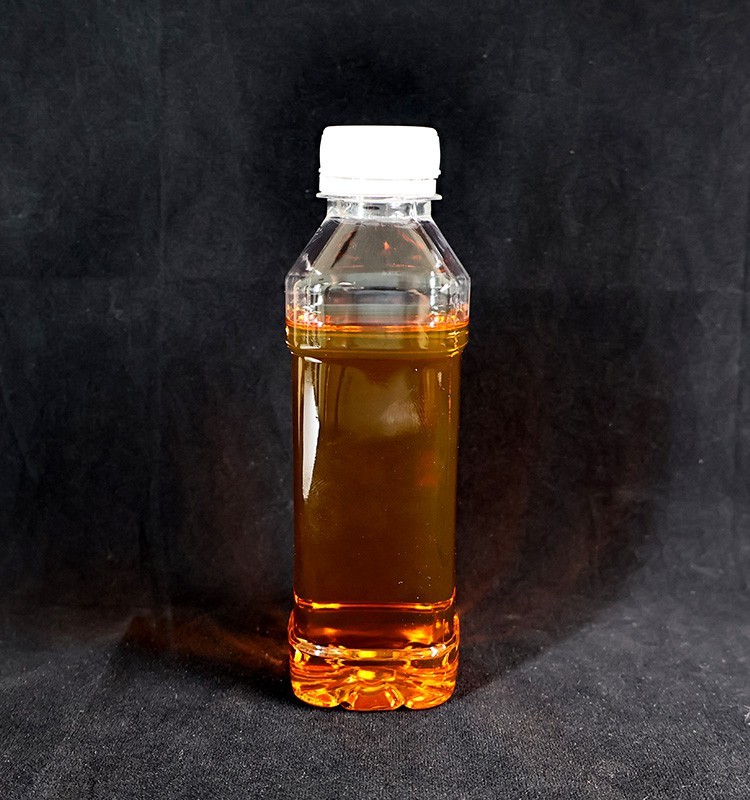
1.1 Organic Corrosion Inhibitors: Precise Protection Driven by Molecular Design
Organic neutralizing (corrosion inhibitor) agents form physical or chemical adsorption with metal surfaces through polar groups (such as N, O, S atoms) in their molecular structure, constructing a dense protective film layer. Its technological advantages are reflected in the flexibility of the formula and environmental adaptability:
Imidazoline class: Represented by imidazoline oleate, nitrogen atom lone pair electrons in the molecule coordinate with metal empty d orbitals to form a chemical adsorption layer. In the application of high sulfur gas fields in Tarim, its anti H ₂ S/CO ₂ synergistic corrosion efficiency reaches 92%, and it has self-healing function, which can quickly reconstruct protection when the film layer is locally damaged.
Quaternary ammonium salts: such as imidazoline quaternary ammonium salts, cationic groups strongly adsorb onto negatively charged metal surfaces, while hindering charge transfer and reducing cathodic reaction rates. In the high-temperature and high-pressure gas wells in Northeast Sichuan, its combination with zinc salts reduced the corrosion rate of carbon steel from 0.5mm/a to 0.02mm/a.
Ethynyl alcohols: Propynyl alcohols and their derivatives exhibit excellent performance in high temperature environments above 100 ℃. When combined with organic nitrogen compounds, they can withstand harsh working conditions of 150 ℃ and 15MPa, making them suitable for deep well ultra-high temperature environments.
1.2 Inorganic neutralizing (corrosion inhibitor) agent: passivation protection formed by oxide film
Inorganic neutralizing (corrosion inhibitor) agents generate dense oxide films on metal surfaces through oxidation reactions, blocking contact with corrosive media
Chromate series: such as potassium dichromate, forms a Cr ₂ O Ⅲ passivation film in the anode region, but due to the environmental risk of containing hexavalent chromium, it is gradually replaced by molybdate and tungstate.
Silicate series: Corrosion inhibition is achieved by suppressing the anodic dissolution process. In the circulating cooling water system, the combination of sodium silicate and polyphosphate can reduce the corrosion rate of carbon steel by 85%.
Phosphate series: such as sodium tripolyphosphate, deposits in the cathode region to form a phosphate protective film. When synergistically treated with zinc salts, the corrosion inhibition efficiency reaches 90% in an environment with a pH of 8-10.
1.3 Polymer based neutralizing (corrosion inhibitor) agents: Long term protection of three-dimensional network structures
Polymer neutralizing (corrosion inhibitor) agents form steric hindrance effects through molecular chain entanglement, while carrying polar groups for directional adsorption
Polyepoxysuccinic acid (PESA): It has both scale and corrosion inhibition functions. In a CO ₂ saturated solution, a concentration of 0.5% can reduce the corrosion rate of N80 steel from 0.8mm/a to 0.05mm/a.
Polyaspartic acid (PASP): has excellent biodegradability. When combined with molybdate, it has a corrosion inhibition efficiency of 88% on copper alloys in seawater environment, and the 96 hour LC50 (fish) is greater than 1000mg/L, which meets environmental requirements.
2.Technical characteristics classified by protective film type
2.1 Oxide Film Corrosion Inhibitors: Electrochemical Passivation Mechanism
Chromates, molybdates, etc. generate dense oxide films on metal surfaces through oxidation reactions, with a thickness typically ranging from 10-100nm. These neutralizing (corrosion inhibitor) agents require a dissolved oxygen content of ≥ 2mg/L in the medium and a pH value maintained within the range of 6-9, otherwise the film layer is prone to rupture.
2.2 Deposition film type neutralizing (corrosion inhibitor) agent: ion deposition protection
Phosphates, silicates, etc. generate insoluble precipitates through hydrolysis reactions, which deposit on the metal surface to form a protective layer. The deposition rate of zinc salt is significantly affected by temperature, pH value, and flow rate. For example, under the conditions of 80 ℃ and pH 9, the deposition rate of zinc salt can reach 0.5 μ m/h.
2.3 Adsorption film type neutralizing (corrosion inhibitor) agent: molecular level interface protection
Organic neutralizing (corrosion inhibitor) agents form a monolayer on metal surfaces through physical or chemical adsorption, with adsorption energies typically ranging from 20-50 kJ/mol. The adsorption enthalpy of imidazolines on iron surfaces reaches -45 kJ/mol, indicating their excellent chemical adsorption stability.
3.Adaptation to application scenarios classified by physical properties
3.1 Water soluble neutralizing (corrosion inhibitor) agent: the main anti-corrosion agent for gathering and transportation systems
Suitable for aqueous media environments, such as circulating cooling water and produced water treatment systems. Polyacrylic acid water-soluble neutralizing (corrosion inhibitor) agent can reduce the corrosion rate of carbon steel to 0.01mm/a at a concentration of 0.1% under the conditions of 30 ℃ and pH 7.5, and there is no antagonistic effect when combined with scale inhibitors.
3.2 Oil soluble neutralizing (corrosion inhibitor) agents: Long term protection for oil and gas pipelines
Through the compatibility of non-polar hydrocarbon chains with oil, polar groups are selectively adsorbed onto metal surfaces. In Tarim Oilfield, the solubility of oil soluble imidazoline neutralizing (corrosion inhibitor) agent in crude oil reaches 5%, which can achieve full protection with the flow of crude oil and reduce the annual anti-corrosion cost of a single well by 60%.
3.3 Gas phase neutralizing (corrosion inhibitor) agent: Expert in confined space protection
Suitable for enclosed environments such as natural gas processing equipment and storage tanks. Dicyclohexylamine nitrite (DICHAN) has a vapor pressure of 0.1Pa at 25 ℃, which can form a complete protective film on the surface of carbon steel within 72 hours and maintain a 90% corrosion inhibition efficiency in a 95% humidity environment.
4.Technological development trends and challenges
4.1 Green Transformation
The EU REACH regulation restricts the use of toxic substances such as chromate and promotes the development of biodegradable neutralizing (corrosion inhibitor) agents. The biodegradation rate of polyaspartic acid derivatives reached 85% within 96 hours, and the acute toxicity to marine organisms (LC50) was>; 1000mg/L。
4.2 Intelligent compounding
Optimize the components of neutralizing (corrosion inhibitor) agents through molecular simulation technology to maximize synergistic effects. For example, by compounding imidazoline with polyethylene glycol in a ratio of 3:1, the corrosion inhibition efficiency in CO ₂ saturated solution can be increased from 82% to 95%.
4.3 Multi functional integration
Develop composite products that combine corrosion inhibition, scale inhibition, and sterilization functions. As a zinc containing polyphosphate neutralizing (corrosion inhibitor) agent, it can disperse Fe ³ ⁺ precipitation while inhibiting corrosion, preventing corrosion under scale and extending the system operation cycle by 30%.
The neutralizing (corrosion inhibitor) agent technology in the natural gas industry is evolving towards high efficiency, environmental friendliness, and intelligence. In the future, with the development of new neutralizing (corrosion inhibitor) agents such as nanomaterials and ionic liquids, as well as the integration of digital monitoring technology, the anti-corrosion system of the natural gas industry will achieve a leapfrog development from passive maintenance to active warning, providing solid guarantees for global energy security supply.

 E-mail:jcl@jichanglong.com
 WhatsApp:+8618560709619
 Address:Block B, Polymer Materials Industry Innovation Park,No. 51, Lutai Avenue, High-tech Zone, Zibo City, Shandong Province


