In the field of water treatment,flocculation and sedimentation are crucial processes,and the choice of flocculant directly determines the purification efficiency and cost.Among numerous coagulants,polyaluminium chloride(PAC)has won the title of"efficient water purifier expert"due to its outstanding performance,especially its precipitation rate far exceeding traditional coagulants such as aluminum sulfate.As the saying goes,the precipitation rate of polyaluminium chloride can be three times faster,which is not an exaggeration.So,what is the scientific principle behind this?This article will delve into the mystery of efficient and rapid settling of polyaluminium chloride.
1.Firstly,where is the"slowness"of traditional flocculants?
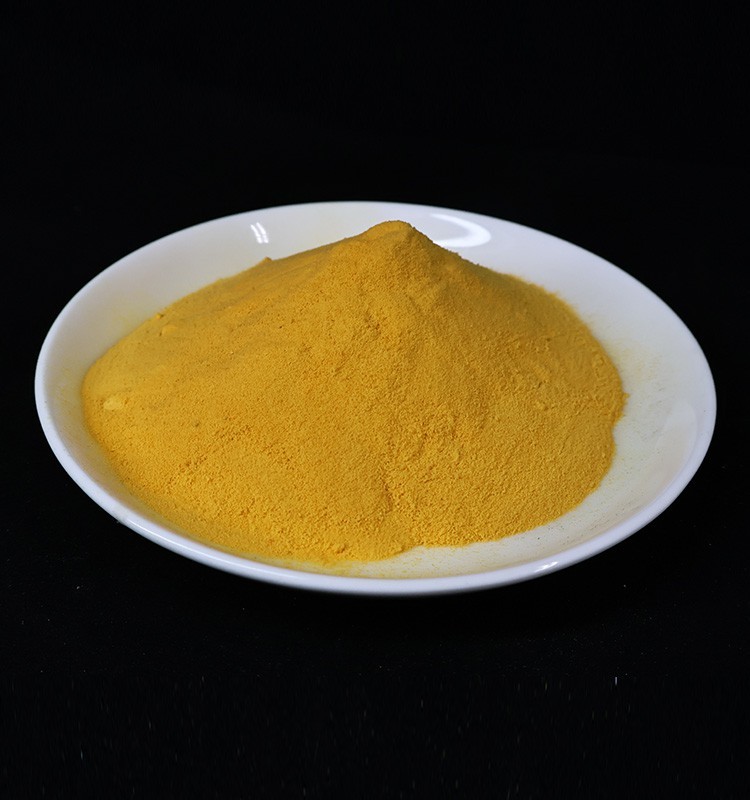
To understand the"fast"of PAC,we need to first understand the"slow"of traditional low molecular weight flocculants such as aluminum sulfate and AS.
1.Slow hydrolysis reaction,greatly affected by pH:After aluminum sulfate is added to water,it needs to undergo a hydrolysis process to generate positively charged aluminum hydroxide colloids.This hydrolysis process is relatively slow and strongly dependent on the pH value of the water body.When the pH value is not suitable,incomplete hydrolysis cannot effectively form flocs,resulting in a significant reduction in precipitation effect.
2.Limited charge neutralization ability:Traditional flocculants mainly rely on the positive charge of their hydrolysis products to neutralize the negative charge of colloidal particles in water(i.e."charge neutralization").But its positive charge is weak,the neutralization efficiency is low,and it takes a longer time and more dosage to complete this process.
3.The formed alum flocs are light,small,and loose:Due to their simple molecular structure,the aluminum hydroxide flocs formed are not tightly packed and are as light and small as snowflakes.These flocs settle slowly and are easily dispersed by water flow during the settling process,resulting in unstable settling effect.
It is these bottlenecks that limit the efficiency and applicability of traditional flocculants.The emergence of polyaluminium chloride fundamentally broke through these limitations.
2.Core reveal:Four major mechanisms for accelerating the precipitation rate of polyaluminium chloride by three times
Polyaluminum chloride is an inorganic polymer with the chemical formula[Al₂(OH)ₙCl₆₋ₙ]ₘ.Its efficiency stems from its unique"pre polymerization"structure and complex mechanism of action.
Mechanism 1:Pre aggregated structure-the"mature form"that wins at the starting line
This is the core advantage of polyaluminium chloride.Unlike traditional coagulants that start hydrolysis polymerization only after being added to water,PAC has already formed structurally stable and highly efficient positively charged polymeric cations in advance through"pre polymerization"technology in the production process,such as[Al₁∝O₄(OH)₂₄(H₂O)₁₂]⁷⁺(commonly known as Al₁∝)with excellent electrical neutralization ability.
No need to wait for hydrolysis,instant reaction:After PAC is added to water,these pre polymerized high charge cations do not need to undergo slow hydrolysis steps and can"immediately"interact with negatively charged colloidal particles in water.This is like a special forces unit that has already loaded bullets and aimed at the target,with a significantly different reaction speed compared to traditional militia that require temporary assembly of firearms.This step saves a lot of initial time for rapid precipitation.
Mechanism 2:Powerful Neutralization Ability-Efficient Disintegration of Colloidal Stability
Colloidal particles suspended in water repel each other due to the same negative charge,and can remain stable in water for a long time,making it difficult to settle.
High charge density,one hit kill:The polymeric cations in polyaluminium chloride have extremely high positive charge density.They can quickly and efficiently compress the double layer of colloidal particles,completely neutralizing their surface negative charges.Once the charge barrier is broken,the repulsive force between colloidal particles disappears,and they quickly lose stability,creating the primary conditions for mutual collision and aggregation.This efficient neutralization ability is the key to PAC's ability to quickly initiate the flocculation process.
Mechanism 3:Excellent bridging adsorption-Building a robust"flocculation network"
After quickly completing charge neutralization,another powerful function of PAC begins to emerge-bridging adsorption of polymer chains.
Long chain structure,encompassing all directions:Polyaluminum chloride,as a polymer,has longer molecular chains.These long-chain molecules"bridge"between already unstable colloidal particles,connecting countless tiny particles together through physical and chemical adsorption,forming a large,dense three-dimensional network structure floc(alum flower).
Compared to traditional methods,the flocs formed by traditional flocculants are loose and disordered"small snowflakes";PAC forms a tightly structured"honeycomb"or"grape cluster"with a reasonable distribution of internal pores.This kind of floc not only has a larger volume,but more importantly,it has high density,good mechanical strength,and is not easily damaged.
Mechanism 4:Efficient sweeping flocculation-the"final acceleration"of the sedimentation process
Polyaluminum chloride will further hydrolyze in water to form aluminum hydroxide precipitate[Al(OH)∝].
Forming a settling network and sweeping downwards:These sediments,during the settling process,act like a huge"filter"and settle downwards,mechanically sweeping and enveloping tiny suspended solids and colloids that have not been completely captured in the water,and carrying them all to the bottom of the pool.This"sweeping flocculation"effect,in conjunction with the aforementioned charge neutralization and bridging adsorption,ensures the thorough purification of the water body without leaving any dead corners.
3.Comprehensive advantage:In addition to speed,there is also a guarantee of"quality"
It is the synergistic effect of the four mechanisms mentioned above that has led to a qualitative leap in the precipitation rate of polyaluminium chloride,with a comprehensive performance far exceeding that of traditional flocculants by more than three times.This efficiency brings a series of high-quality chain effects:
1.Alum formation is fast and dense:the reaction is rapid,the formation time of alum is short,and the structure is large and dense,with a clear settlement path.
2.Significant increase in settling speed:The dense alum flowers have a large weight and are significantly affected by gravity,so they sink at a faster rate,greatly reducing the hydraulic retention time of the sedimentation tank.
3.Better effluent quality:Rapid settling reduces the residence time of flocs in water,avoiding the breakage and re suspension of flocs caused by prolonged time,ensuring the clarity of the upper clear liquid and extremely low effluent turbidity.
4.Strong adaptability and low consumption:PAC is suitable for a wide pH range(5-9)and has strong anti-interference ability.Due to its high efficiency,when treating the same water quality,the dosage of aluminum sulfate can be reduced by more than one-third compared to traditional methods,reducing operating costs.
5.Capacity improvement:The increase in sedimentation rate means that in sedimentation tanks of the same size,the water flow rate can be appropriately increased,thereby improving the processing capacity and efficiency of the entire water treatment system.
The reason why polyaluminium chloride can achieve a miraculous precipitation rate three times faster is not due to the improvement of a single factor,but rather the inevitable result of the synergistic operation of its pre polymerization structure,powerful electric neutralization,efficient bridging adsorption,and roll sweep flocculation mechanisms.It has been in a higher form since birth,achieving high efficiency,speed,and stability in every step of water purification.
Choosing polyaluminium chloride is not only about choosing a flocculant,but also about choosing an advanced solution that improves the efficiency of the entire water treatment system,ensures effluent quality,and reduces overall costs.This is precisely the fundamental reason why it has become a mainstream flocculant in many fields such as municipal water supply,industrial wastewater,papermaking,printing and dyeing.

 E-mail:jcl@jichanglong.com
 WhatsApp:+8618560709619
 Address:Block B, Polymer Materials Industry Innovation Park,No. 51, Lutai Avenue, High-tech Zone, Zibo City, Shandong Province


