In key fields such as industrial water treatment,papermaking,and printing and dyeing,aluminium sulfate serves as a core flocculant and additive,and its form selection directly affects process efficiency and cost control.The global market size of aluminium sulfate has exceeded 2.5 billion US dollars,with solid and liquid forms dominating.This article will systematically analyze the technical differences and selection strategies of three mainstream forms of aluminium sulfate from the dimensions of physical properties,application adaptability,storage and transportation.
1.Solid Aluminium sulfate:Technological Advantages of Traditional Forms
1.Physical properties and preparation process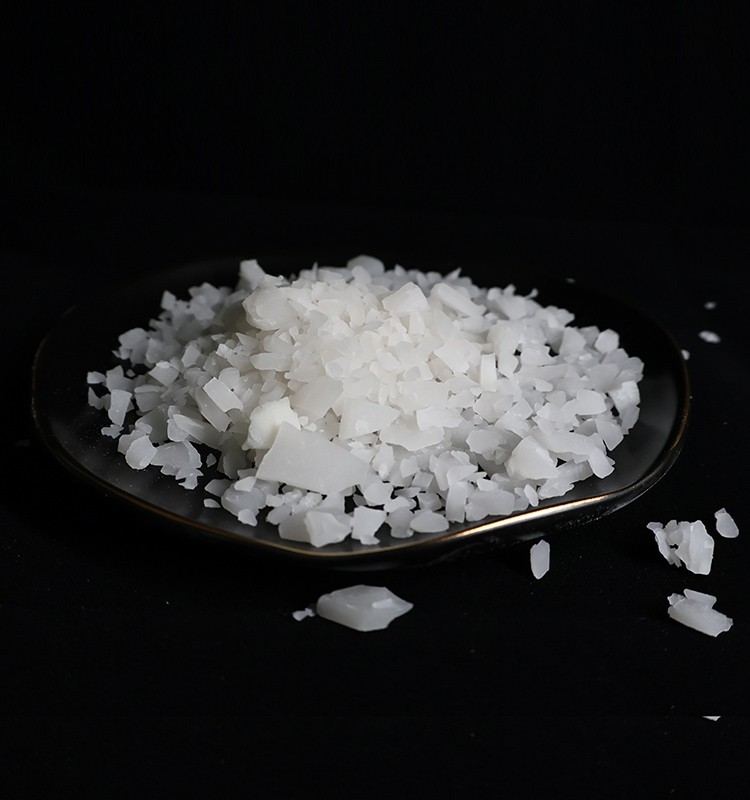
Solid aluminium sulfate usually exists in the form of white crystalline powder or particles,with a chemical formula of Al₂(SO₄)∝·18H₂O(octadecahydrate)and an aluminum content of≥15.8%.The particle size distribution can be controlled within the range of 0.1-3mm through spray drying,drum drying and other processes.High purity products(with Al₂O3 content≥17%)require recrystallization purification to meet high-end application requirements such as electronic grade.
2.Core application scenarios
In the field of water treatment:In the purification of drinking water,solid aluminium sulfate is hydrolyzed to form Al(OH)3 colloids,effectively removing suspended solids and colloidal impurities.The dosage should be accurately calculated based on the turbidity(NTU value)of the raw water,with a typical dosage of 10-50mg/L.
Paper industry:As a sizing agent and retention aid,solid aluminium sulfate can improve the water resistance and retention of fine fibers in paper.In the acidic papermaking system,its synergistic effect with rosin gum increases the paper sizing degree by more than 30%.
Printing and dyeing industry:As a mordant,solid aluminium sulfate can fix dye molecules in cotton fabric dyeing,improving color fastness(friction fastness≥4 levels).Its pH buffering capacity(pH 3.5-4.5)helps maintain the stability of the dyeing process.
3.Storage and transportation advantages
The solid form gives aluminium sulfate:
Low transportation cost:With a moisture content of only 8-12%,the effective ingredient content per unit weight is 3-5 times that of liquid form
Long term stability:can be stored for more than 12 months in a dry environment(relative humidity<60%),with a loss of aluminum content<1%
Safety and Convenience:No risk of leakage,meets UN3077 dangerous goods transportation standards,and can be delivered through regular logistics
4.Usage restrictions and improvement directions
Solid aluminium sulfate needs to be dissolved on-site to prepare a solution,and the dissolution time is significantly affected by water temperature(the solubility is about 36.4g/100mL at 20℃).To improve usage efficiency,the industry is developing:
Instant granules:By using granulation technology to give the granules a porous structure,the dissolution time is shortened to less than 5 minutes
Composite formula:Premixed with polyacrylamide(PAM)to form a binary composite flocculant,simplifying the dosing process
2.Liquid Aluminium sulfate:A Modern Solution for Efficient Applications
1.Solution characteristics and concentration range
Liquid aluminium sulfate typically exists in the form of an aqueous solution with a concentration of 10-18%Al₂O3,a density of 1.2-1.4g/cm³,and a pH value of 2.5-3.5.By controlling the crystallization temperature and evaporation process,products of different concentrations can be produced,with 12%concentration products becoming the mainstream due to transportation economy.
2.Advantages of process adaptability
Instant dosing system:Liquid form can be directly added through a metering pump,with a response time of less than 30 seconds,suitable for automation control scenarios
Uniform dispersion:Under high-speed stirring conditions(300-500rpm),uniform mixing with water can be completed within 10 seconds
PH adjustment ability:The solution itself is acidic and can simultaneously complete the dual functions of flocculation and pH adjustment,reducing the types of chemical agents
3.Storage and transportation considerations
Liquid aluminium sulfate requires special storage conditions:
Anti corrosion container:Use polyethylene(PE)or fiberglass reinforced plastic(FRP)storage tanks to avoid reaction with metal containers
Temperature control:The storage temperature should be maintained at 5-35℃to prevent low-temperature crystallization(crystallization point of about 5℃)and high-temperature decomposition
Transportation cost:Due to its high moisture content(82-90%),the transportation cost per unit of active ingredient is 2-3 times that of solid form
4.Technical upgrade direction
To overcome the transportation disadvantage of liquid aluminium sulfate,the industry is promoting:
Concentration technology:By using membrane separation process,the concentration is increased to 25%,reducing the transportation volume
On site liquid production system:Install a dissolution device at the user end to convert solid aluminium sulfate into liquid,balancing economy and convenience
Stabilizer addition:Add a small amount of phosphate(such as sodium tripolyphosphate)to prevent low-temperature crystallization and expand the temperature range of use
3.Special form aluminium sulfate:technological breakthrough for customized needs
1.Iron free aluminium sulfate:the pure choice for high-end applications
By using special purification processes such as ion exchange,the iron content is controlled below 0.005%to meet the following requirements:
Electronics industry:In semiconductor cleaning,the iron ion content should be less than 0.001%to avoid contaminating the wafer surface
Food grade application:Complies with GB 25591-2010 standard,with an iron content limit of 0.01%when used for drinking water treatment
High end papermaking:preventing iron ion catalyzed oxidation and discoloration of paper,improving the stability of paper whiteness
2.Alkaline aluminium sulfate:adaptation scheme for special pH environment
By controlling the degree of hydrolysis,prepare weakly alkaline solutions with pH values of 5-7,suitable for:
Alkaline wastewater treatment:It can still maintain flocculation activity in alkaline wastewater with pH>8,breaking through the pH range of traditional aluminium sulfate
Biological pre-treatment:As a pre-treatment agent for biological contact oxidation method,it avoids the inhibition of microorganisms by acidic environment
3.Microcapsule aluminium sulfate:innovative application of sustained-release technology
Using polymer encapsulation technology,aluminium sulfate particles are encapsulated in capsules with a diameter of 1-100μm to achieve:
Long term release:aluminum ions can be sustainably released in wastewater treatment for 12-24 hours,reducing the frequency of addition
Targeted effect:By surface modification,the capsule is directed to adsorb onto specific pollutant surfaces,improving removal efficiency
Low temperature applicability:able to maintain over 80%flocculation activity at low temperatures of 5℃,expanding application scenarios in northern regions
4.Future Technology Trends:Form Fusion and Innovation
With the development of materials science and process engineering,the form of aluminium sulfate is showing a trend of integration:
Solid liquid hybrid formulation:Developing composite particles with solid core and liquid shell,combining dissolution speed and transportation advantages
Intelligent Form Conversion:Utilizing temperature/pH responsive polymers to achieve on-demand conversion from solid to liquid
3D printing customization:Manufacturing aluminium sulfate carriers with specific pore structures through 3D printing technology to improve reaction efficiency
The global aluminium sulfate market is expected to grow at a CAGR of 3.8%,with a liquid form growth rate of 5.2%.The main driving factors include the automation upgrade of the water treatment industry and the high-end transformation of the paper industry.Enterprises need to establish dynamic form selection strategies based on their own process characteristics,cost structure,and environmental requirements in order to gain a competitive advantage in the market.
The technological evolution of aluminium sulfate,from traditional solids to intelligent liquids,from universal products to customized forms,is profoundly changing the industrial processing paradigm.Understanding the technical characteristics and application boundaries of different forms will become a key decision-making element for enterprises to optimize processes,reduce costs,and enhance competitiveness.

 E-mail:jcl@jichanglong.com
 WhatsApp:+8618560709619
 Address:Block B, Polymer Materials Industry Innovation Park,No. 51, Lutai Avenue, High-tech Zone, Zibo City, Shandong Province


