The application of flocculant XN312 is very extensive in various water treatment scenarios.However,facing the numerous types and brands of XN312 on the market,how to choose the best one has become a challenge.Factors such as water quality characteristics,treatment scale,and cost budget can all affect the selection results.Different water qualities,such as the amount of suspended solids and acidity,have different requirements for coagulants;The processing scale is large,and there are requirements for the stability and supply capacity of flocculants;The cost budget determines the range of options available.Next,we will introduce in detail the method of selecting the best flocculant XN312.
1.Analysis of water quality characteristics:a prerequisite for accurate matching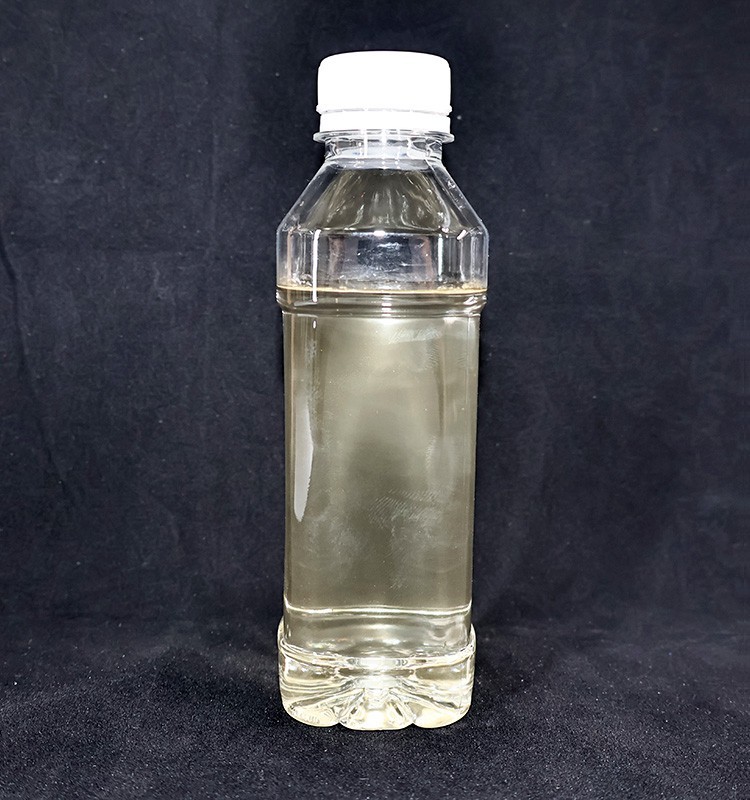
The first step in selecting flocculant XN312 is to comprehensively analyze the characteristics of the water quality to be treated,including key parameters such as suspended solids type,pH value,temperature,ion concentration,and organic matter content.
1.Types and concentrations of suspended solids
-Inorganic suspended solids(such as sediment and metal oxides):Flocculant XN312 has efficient flocculation effect on inorganic particles with particle size>10μm,especially suitable for high turbidity water(such as mining wastewater and river dredging water).The active groups on its molecular chain can rapidly aggregate small particles to form large flocs through adsorption bridging.
-Organic suspended solids(such as colloids and microorganisms):If the water contains a large amount of organic colloids(such as dye molecules in printing and dyeing wastewater),XN312 needs to be used in combination with coagulants(such as polyaluminum chloride)to enhance flocculation efficiency through the synergistic effect of charge neutralization and bridging.
-Suspended solids concentration:For low concentration suspended solids(<100mg/L),the dosage of flocculant XN312 should be reduced(such as 0.5-2mg/L)to avoid excessive flocculation and floc breakage;For high concentration suspended solids(>1000mg/L),it is necessary to increase the dosage appropriately(such as 5-10mg/L)and optimize the stirring intensity.
2.Influence of pH value
The flocculation performance of XN32 is significantly affected by pH value:
-Acidic environment(pH<6):The amino groups on the flocculant XN312 molecular chain are prone to protonation,carry positive charges,and enhance the adsorption effect on negatively charged suspensions(such as silicate colloids).However,excessive acidification may cause the molecular chain to curl and reduce bridging ability.
-Neutral environment(pH=6-8):XN312 has the best performance,with fully extended molecular chains,balanced adsorption and bridging effects,and is suitable for most municipal and industrial wastewater.
-Alkaline environment(pH>8):Carboxyl deprotonation with negative charge enhances the flocculation effect on positively charged suspended solids(such as metal hydroxides),but the pH value needs to be controlled to avoid excessive looseness of flocs.
3.Temperature and ion concentration
-Temperature:Low temperature(<10℃)will reduce the activity of flocculant XN312 molecules,and it is necessary to increase the dosage(such as 20%-30%higher than room temperature)or extend the reaction time;High temperature(>40℃)may accelerate molecular chain breakage,and it is necessary to choose heat-resistant XN312 modified products.
-Ionic concentration:In high salinity water(such as seawater desalination concentrate),divalent ions such as Ca²⁺and Mg²⁺can compress the double layer of XN312 molecules,promoting floc formation.However,excessive ions(such as Na²⁺>5000mg/L)may shield the charge and reduce the flocculation effect.
2.Performance evaluation of flocculant XN312:analysis of core indicators
When selecting flocculant XN312,it is necessary to evaluate its key performance indicators through laboratory beaker tests or pilot tests to ensure compatibility with water quality characteristics.
1.Flocculation speed and settling speed
-Flocculation speed:Record the time from the addition of XN312 to the initial formation of flocs(usually<5 minutes is preferred).Rapid flocculation can shorten hydraulic retention time and improve treatment efficiency.
-Settling velocity:Measure the settling velocity of flocs in a static state(such as settling height within 10 minutes).XN312 with settling velocity>5cm/min is suitable for rapid separation of high turbidity water.
2.floc strength and redispersibility
-Floc strength:Observe whether the flocs are broken through a stirring test(such as stirring at 300rpm for 1 minute).High strength flocs(breakage rate<20%)can reduce subsequent filtration or centrifugation loads.
-Redispersibility:Evaluating the ability of flocs to re aggregate after fragmentation,flocculant XN312 with good redispersibility is suitable for scenarios with large water quality fluctuations(such as rainwater treatment).
3.Residual monomers and toxicity
-Residual monomer:During the synthesis process of flocculantV XN312,a small amount of acrylamide monomer may remain.It is necessary to choose products with a residual amount of<0.05%to avoid secondary pollution to the effluent water quality.
-Toxicity:Verify the inhibitory effect of XN312 on microorganisms through biological toxicity testing(such as acute toxicity testing of luminescent bacteria)to ensure its suitability for biological treatment processes(such as activated sludge process).
3.Application scenario matching:from requirements to solutions
Select the appropriate XN312 type and dosing method based on the processing objectives(such as turbidity removal,COD reduction,sludge dewatering)and process types(such as coagulation sedimentation,air flotation,filtration).
1.Coagulation and sedimentation process
-Goal:Quickly remove suspended solids and some colloids,and reduce effluent turbidity.
-Selection points:Priority should be given to flocculant XN312 with high molecular weight(>10 million)and moderate charge density.The injection point should be located in the rapid mixing tank,and the stirring intensity should be controlled at 200-300rpm.
2.Air flotation process
-Objective:To remove light suspended solids(such as oils,fibers)and partially dissolved organic matter.
-Key points for selection:Choose XN312 with low molecular weight(5-8 million)and good foaming properties,with the injection point located in front of the dissolved gas release zone and thoroughly mixed with dissolved gas water.
3.Sludge dewatering
-Objective:To improve the efficiency of sludge dewatering and reduce the moisture content of sludge cake.
-Key points for selection:Choose flocculantV XN312 with high cation density(such as 30%-50%ion density),adjust the dosage according to the nature of the sludge(such as 5-15mg/gDS for activated sludge),and use it in conjunction with a belt filter press or centrifuge.
4.Operation optimization:improve efficiency and reduce costs
By optimizing the dosage,mixing conditions,and compounding scheme,the effectiveness of XN312 can be further improved.
1.Optimization of dosage
-Initial dosage:Determine the initial dosage based on water quality characteristics and beaker test results(such as 2-5mg/L),and then fine tune it through on-site testing.
-Dynamic adjustment:Install an online turbidity meter or SS detector,adjust the dosage in real time according to the fluctuation of incoming water quality,and avoid excessive or insufficient dosage.
2.Mixed condition control
-Quick mixing:Ensure sufficient contact between flocculant XN312 and water,control the mixing time within 1-3 minutes,and stir at a strength of 200-300rpm.
-Slow response:Control the flow rate of the flocculation reaction tank at 0.3-0.6m/min to avoid floc breakage.
3.Compound scheme
-Compound with inorganic flocculant:XN312 is combined with polyaluminum chloride(PAC)to improve the treatment effect of high turbidity water.The order of addition is PAC first and then XN312.
-Compound with coagulant aid:Adding a small amount of polyacrylamide(PAM)as a coagulant aid can enhance floc strength and reduce the amount of XN312 used.
5.Supplier selection and quality assurance
Choosing a reliable flocculant XN312 supplier is key to ensuring processing effectiveness:
-Qualification certification:Priority should be given to suppliers who have passed the ISO 9001 quality management system and ISO 14001 environmental management system certifications.
-Product testing:Suppliers are required to provide third-party testing reports(such as SGS,CMA)to verify key indicators such as residual monomers,molecular weight,and ionicity.
-Technical Services:Choose suppliers who provide technical consulting,on-site debugging,and after-sales tracking services to ensure the continuous optimization and application of XN312.
The selection of the best flocculant XN312 should be based on water quality analysis,with performance evaluation as the core,application scenario matching as the direction,and efficient application achieved through operational optimization and supplier management.Through scientific selection and refined management,XN312 can play a key role in improving treatment efficiency,reducing operating costs,and minimizing environmental impact,providing sustainable solutions for industrial and municipal water treatment.With the advancement of material technology,the modified products of XN312(such as temperature resistant and salt resistant)will further expand their application boundaries and meet more complex processing requirements.

 E-mail:jcl@jichanglong.com
 WhatsApp:+8618560709619
 Address:Block B, Polymer Materials Industry Innovation Park,No. 51, Lutai Avenue, High-tech Zone, Zibo City, Shandong Province


