Polyacrylamide (abbreviated as PAM) is a synthetic water-soluble polymer widely used across multiple industries including water treatment, petroleum extraction, papermaking, textiles, pharmaceuticals, and cosmetics. Due to its exceptional thickening, flocculation, and drag-reducing properties, polyacrylamide plays a vital role in industrial production and environmental protection. With increasing environmental standards and technological advancements, the application scope of polyacrylamide continues to expand, achieving widespread adoption globally.
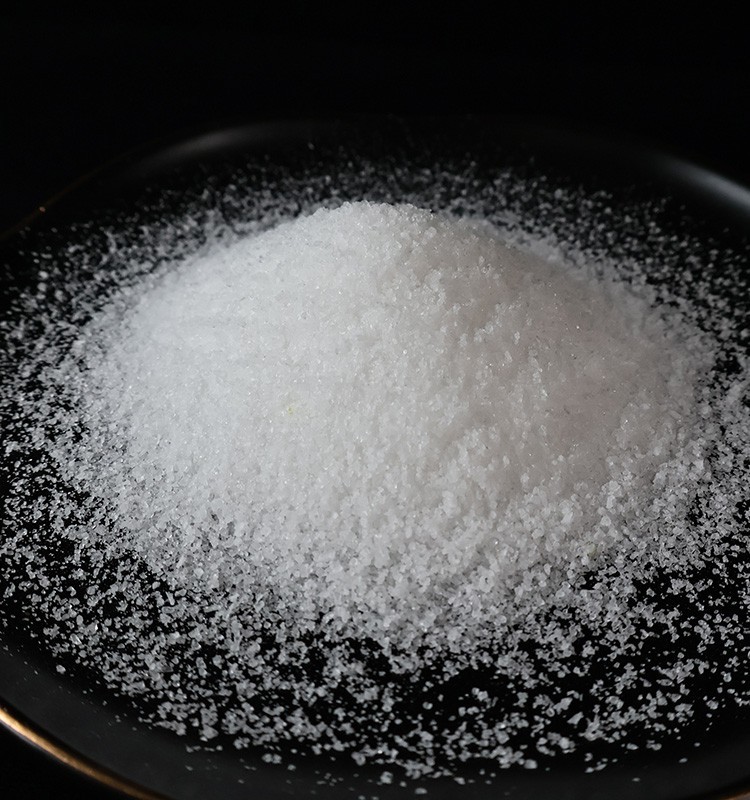
Polyacrylamide is a linear polymer formed by the polymerization of acrylamide monomers, containing a large number of amide groups in its structure. These groups confer excellent adsorption capacity and solubility, providing the fundamental basis for its diverse applications.
- High Water Absorption: Polyacrylamide can absorb hundreds of times its own weight in water to form a gel state, effectively addressing flocculation and separation challenges in water treatment.
- Excellent Chemical Stability: It exhibits good tolerance in acidic and alkaline environments, making it suitable for diverse complex conditions.
- Adjustable molecular weight: By controlling polymerization conditions, high-molecular-weight or low-molecular-weight polyacrylamide can be produced to meet diverse application requirements.
Polyacrylamide finds extensive application in water treatment, playing a pivotal role in sewage treatment, industrial wastewater processing, drinking water purification, and water resource recovery. As a highly effective flocculant, its molecular chain structure efficiently adsorbs suspended solids, oil contaminants, and fine particles in water, forming flocs that facilitate the settling of these impurities.
(1) Flocculant Function:As a flocculant in water treatment, polyacrylamide aggregates minute particles into larger flocs, significantly enhancing solid-liquid separation efficiency. Its unique molecular chain structure delivers outstanding performance when treating water bodies with high suspended solids content, finding extensive application in municipal sewage treatment, paper mill wastewater, and mining wastewater.
(2) Coagulant Aid Function:In water treatment processes, polyacrylamide is frequently used in conjunction with inorganic coagulants (such as aluminum sulfate or ferric sulfate) as a coagulant aid. This synergistic application further enhances the removal of solid particles. This composite approach not only improves wastewater treatment effectiveness but also reduces the required dosage of inorganic coagulants, thereby lowering treatment costs.
(3) Sludge Dewatering:Polyacrylamide is also highly effective in sludge dewatering. During sludge treatment, its flocculation properties adsorb water from the sludge, reducing its volume and facilitating subsequent processing and disposal. Polyacrylamide significantly improves sludge dewatering efficiency, making the treatment process more efficient and environmentally friendly.
Polyacrylamide also plays a vital role in petroleum extraction, particularly in tertiary oil recovery and drilling operations. As extraction challenges intensify, its significance grows. Key applications include:
By increasing the viscosity of injected water and enhancing its wetting coefficient, polyacrylamide improves oil recovery efficiency. This technique, known as polymer flooding, is widely employed in tertiary recovery. The thickening effect of polyacrylamide solutions reduces interfacial tension between oil and water, displacing residual crude oil from reservoirs and significantly boosting recovery rates.
During drilling operations, polyacrylamide functions as a filtration loss reducer. It minimizes water migration from drilling fluids into formations, preventing wellbore collapse and ensuring drilling safety and stability. Simultaneously, polyacrylamide stabilizes drilling fluids, reduces fluid loss, and improves drilling quality.
During later stages of oil extraction, substantial inflow of water into the wellbore may reduce oil production. As a water blocking agent, polyacrylamide selectively seals high-permeability formations, reducing water phase permeation and thereby boosting oil well output.
In the pulp and paper industry, polyacrylamide plays a crucial role, primarily used to enhance the dry and wet strength of paper, improve pulp dewatering efficiency, and promote the retention of solid particles in pulp.
As a retention aid, polyacrylamide effectively fixes fine fibers, fillers, and other solid particles within the paper structure, reducing pulp loss and increasing paper yield. This function is vital during paper production, particularly in manufacturing high-strength papers where polyacrylamide's role is especially prominent.
Polyacrylamide enhances both wet and dry strength of paper, making the finished product more resilient. Its strengthening effect is especially pronounced in high-strength paper products like tissue paper, industrial packaging paper, and paper towels. This reinforcement reduces tear susceptibility and extends the paper's service life.
Polyacrylamide also improves pulp flowability and drainage properties, shortening drying times, boosting production efficiency, reducing energy consumption, and consequently enhancing both the efficiency and quality of paper manufacturing.
Polyacrylamide boasts extensive applications beyond water treatment, oil extraction, and papermaking. It also plays vital roles in the following sectors:
As a thickener, sizing agent, and adhesive in textiles and dyeing, polyacrylamide enhances yarn strength and smoothness while reducing breakage rates. In dyeing processes, it ensures uniform color distribution and vibrant hues, achieving superior dyeing results.
In pharmaceutical formulations, polyacrylamide serves as a film-forming agent, binder, and stabilizer, widely used in tablet production, sustained-release formulations, and other applications. It is also employed in manufacturing hydrogel materials for contact lenses, offering excellent biocompatibility.
Due to its excellent moisturizing and thickening properties, polyacrylamide is used in cosmetics as an emulsifier and stabilizer, enhancing product texture for a smoother, more pleasant application experience. Its applications are widespread in skincare products, shampoos, body washes, and other cosmetics.
The thickening properties of polyacrylamide are also applied in the construction industry, particularly in the production of building materials like cement mortar and gypsum board. It improves workability and adhesion, facilitating construction operations.
With increasing environmental requirements and technological advancements, the application scope of polyacrylamide will continue to expand. Future R&D efforts will focus on the following directions:
(1) Environmentally Friendly Polyacrylamide:Traditional polyacrylamide production and use may impact the environment. Future development will concentrate on improving manufacturing processes to reduce byproduct generation and ensure eco-friendly characteristics.
(2) Bio-based Polyacrylamide:Advancements in biotechnology are enabling scientists to explore microbial synthesis or plant extraction as alternatives to petrochemical feedstocks for polyacrylamide production. This approach reduces reliance on fossil resources and aligns with green chemistry principles.
(3) Smart Polyacrylamide Materials:Future polyacrylamide will evolve toward functionalization and intelligence. By optimizing molecular structures and introducing responsive groups, it can adapt to external conditions (e.g., temperature, pH), opening new application domains.
As a functional chemical additive, polyacrylamide has already played a vital role across multiple industries. With ongoing advancements in environmental protection and technology, its application domains will continue to expand, positioning it to become a key material in more industrial and environmental sectors. Through green production and intelligent development, polyacrylamide will persist in delivering efficient, eco-friendly solutions to diverse industries.

 E-mail:jcl@jichanglong.com
 WhatsApp:+8618560709619
 Address:Block B, Polymer Materials Industry Innovation Park,No. 51, Lutai Avenue, High-tech Zone, Zibo City, Shandong Province
Our company specializes in vanadium inhibitors , dehumidification and drying block, calcium hypochlorite disinfectant tablet, polyacrylamide and other products. With over 20 years of experience, we offer quality assurance and wholesale prices.


