Polyacrylamide (PAM) is a polymeric compound formed through the polymerization of acrylamide monomers. Renowned for its exceptional flocculation, thickening, drag-reducing, and binding properties, it finds extensive applications in water treatment, papermaking, oil extraction, mining, textile printing and dyeing, and agricultural water retention. As a typical polymeric compound, the preparation of polyacrylamide integrates key technical aspects including chemical synthesis, reaction control, and environmental safety. This article systematically introduces the polyacrylamide preparation process from multiple perspectives.
Polyacrylamide production primarily relies on acrylamide monomer. Industrially, acrylamide is primarily obtained through the reaction of acrylonitrile with water. This process typically involves the following steps:
(1) Raw Material Reaction: Acrylonitrile reacts with water in the presence of copper-based catalysts or enzyme catalysts to form acrylamide.
[CH₂=CH-CN + H₂O → CH₂=CH-CONH₂]
(2) Separation and Purification: The reaction mixture undergoes evaporation, filtration, ion exchange, and other processes to remove unreacted acrylonitrile and byproducts, yielding a high-purity acrylamide solution.
(3) Autopolymerization Inhibition: Acrylamide spontaneously polymerizes during storage and transportation. Therefore, a small amount of polymerization inhibitor (e.g., resorcinol, sulfite) is added, and it must be stored at low temperatures and protected from light.
Acrylamide is a toxic substance with neurotoxic properties. Strict adherence to safety standards and environmental protection requirements is mandatory throughout its preparation and handling.
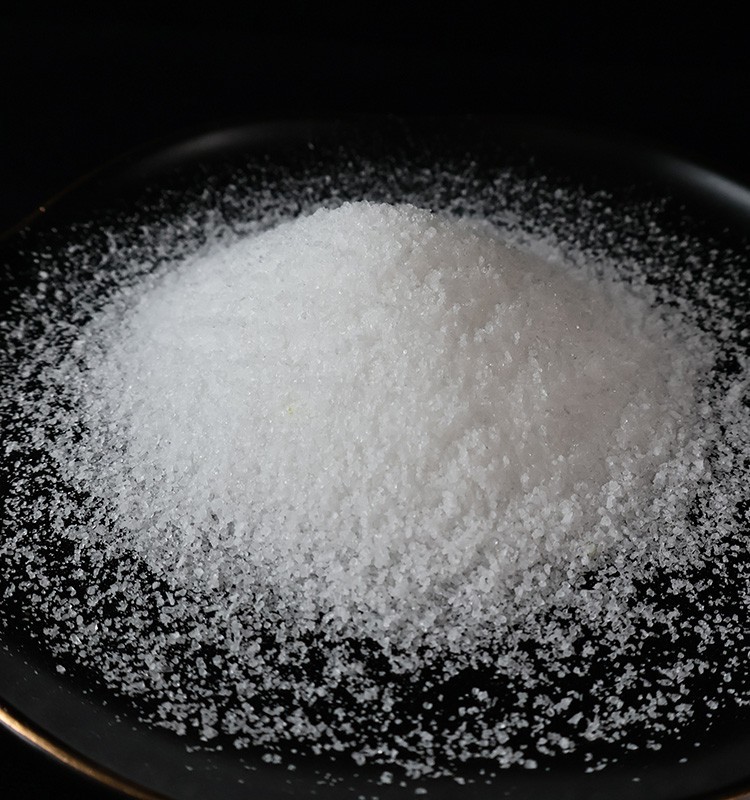
The core process of polyacrylamide production is radical polymerization.The reaction mechanism primarily consists of three stages:
(1)Initiation stage: Under the action of an initiator, acrylamide monomers form radicals, initiating the formation of polymer chains.
(2)Chain Growth Stage: Free radicals continuously combine with other monomers, extending the molecular chain and gradually increasing the molecular weight.
(3)Chain Termination Stage: Two free radicals combine or undergo transfer, concluding the polymerization reaction and yielding high-molecular-weight polyacrylamide.
Common initiation systems include:
- Thermal initiation systems: Such as ammonium persulfate (APS) and sodium persulfate (Na₂S₂O₈), suitable for high-temperature polymerization;
- Redox initiation systems: Such as ammonium persulfate-sodium sulfite or hydrogen peroxide-ferrous salts, suitable for low-temperature polymerization;
- Photoinitiation systems: Utilizing ultraviolet light or photosensitizers to initiate reactions, suitable for certain specialty polymerizations.
The molecular weight and polymerization rate of polyacrylamide can be controlled by adjusting the initiator concentration, temperature, and reaction time.
Currently, three primary methods are used for industrial polyacrylamide production: solution polymerization, reverse emulsion polymerization, and suspension polymerization. Different processes influence product form, molecular weight, and application fields.
This is the most common traditional route. Acrylamide monomer is dissolved in water, then an initiator is added, and polymerization occurs under stirring.
The process flow is as follows:
Solution preparation → Deoxygenation treatment → Heating polymerization → Cooling dehydration → Drying and grinding
Its advantages include simple equipment, mature technology, and suitability for large-scale continuous production. Spray drying yields white powdered polyacrylamide, facilitating storage, transportation, and use.
Aqueous acrylamide solution is dispersed in an oil phase to form an “oil-in-water” emulsion system, followed by polymerization with an initiator.
Advantages: Low reaction temperature, fast rate; enables production of high molecular weight polyacrylamide; product exists as an emulsion, facilitating dilution and use.
This method is commonly used to produce cationic or anionic polyacrylamide, widely applied in water treatment and the papermaking industry.
This method disperses acrylamide into minute droplets through mechanical agitation, polymerizing within an oil phase to form granular products.
Advantages include: controllable particle size; convenient post-processing; high product purity. Primarily used in applications requiring polyacrylamide with specific particle size specifications.
The properties of polyacrylamide are closely related to polymerization conditions, primarily involving the following aspects:
(1) Temperature: Excessively low temperatures slow reaction rates; excessively high temperatures may cause chain scission or side reactions. Generally controlled between 30–60°C.
(2) pH Value: Neutral or slightly alkaline conditions promote reaction stability.
(3) Initiator Concentration: Excess initiator reduces molecular weight, while insufficient initiator causes incomplete polymerization.
(4) Stirring Speed: Moderate agitation aids heat dissipation and uniform mixing, but excessive stirring induces mechanical degradation.
(5) Chain Transfer Agents: Appropriate addition of thiols, isopropanol, etc., controls polymer molecular weight and prevents excessive growth.
By comprehensively regulating these parameters, polyacrylamide with varying molecular weights (from millions to tens of millions) and ionic properties can be produced to meet diverse industrial demands.
Upon completion of the polymerization reaction, a high-viscosity polyacrylamide colloid or emulsion is obtained. The following steps are required to produce the final product:
(1) Dehydration: Excess moisture is removed using centrifuges or vacuum drying equipment.
(2) Drying: Hot air or spray drying is employed to reduce the product's moisture content to the specified range.
(3) Grinding and Screening: The dried solid is mechanically ground and screened into different particle sizes to meet diverse application requirements.
(4) Packaging and Storage: The finished product should be stored in sealed containers, protected from moisture and direct sunlight to prevent performance degradation or self-polymerization.
Based on ionic characteristics, polyacrylamide can be categorized into three main types:
(1) Anionic PAM: Produced by copolymerizing acrylic acid or other carboxylic acid monomers, commonly used in wastewater sedimentation, mineral processing, and river management.
(2) Cationic PAM: Synthesized by copolymerizing cationic monomers (e.g., DMAEA, DMDAAC), applied in sludge dewatering, paper retention/filtration aids, and textile sizing.
(3) Nonionic PAM: Polymerized from pure acrylamide, suitable for neutral or weakly acidic aqueous systems, commonly used in construction, petroleum extraction, and other fields.
Additionally, crosslinking agents can be introduced to produce crosslinked polyacrylamide (e.g., water-absorbing resins, soil moisture retainers), which exhibit excellent water absorption and release capabilities.
Acrylamide monomer possesses certain toxicity, necessitating strict adherence to safety protocols throughout production:
(1)Production facilities must operate in enclosed spaces equipped with ventilation systems to prevent monomer vapor dispersion.
(2)Operators must wear protective gloves, goggles, and respirators to avoid skin contact and inhalation.
(3)Waste liquids and gases must undergo treatment before discharge. Residual monomers are commonly treated via adsorption, oxidation, or biological methods.
(4)Products must comply with national and international safety standards. For example, PAM used in drinking water treatment requires residual acrylamide content below 0.05%. Safe production not only impacts corporate reputation but also forms the foundation for the sustainable development of the polyacrylamide industry.
Driven by increasingly stringent environmental regulations and heightened performance demands from downstream industries, polyacrylamide production technologies are evolving in the following directions:
(1) Green, low-toxicity processes: Employing biocatalytic methods to synthesize acrylamide, reducing pollution from traditional copper catalysts;
(2) Low-energy reaction systems: Utilizing photoinitiation and microwave-assisted polymerization to enhance energy efficiency;
(3) High-molecular-weight product development: Producing ultra-high molecular weight products exceeding 20 million molecular weight by controlling chain transfer and initiation rates;
(4) Automation and intelligent control: Implementing online detection systems for precise regulation of reaction temperature, pH, and conversion rates;
(5) Functionalized copolymers: Developing salt-resistant, high-temperature-tolerant, conductive, or smart-responsive PAMs for applications in oilfields, pharmaceuticals, and materials science.
The preparation of polyacrylamide represents an artful integration of chemical synthesis and engineering control. From the hydration of acrylonitrile to form monomers, through free-radical polymerization to create polymers, to subsequent drying, grinding, and quality inspection—each step determines the product's performance and application value.
It transcends being a mere polymer material, serving as an indispensable additive in modern industry. With the ongoing advancement of green chemistry and smart manufacturing, future polyacrylamide production will become more efficient, safer, and environmentally friendly, providing stronger technological support for global water resource management, energy development, and the new materials industry.

 E-mail:jcl@jichanglong.com
 WhatsApp:+8618560709619
 Address:Block B, Polymer Materials Industry Innovation Park,No. 51, Lutai Avenue, High-tech Zone, Zibo City, Shandong Province
Our company specializes in vanadium inhibitors , dehumidification and drying block, calcium hypochlorite disinfectant tablet, polyacrylamide and other products. With over 20 years of experience, we offer quality assurance and wholesale prices.


