Among the many fields of environmental pollution control, sewage treatment has always been a crucial task. With the rapid development of industrialization and urbanization, the amount of sewage discharge continues to increase, and the composition of sewage is becoming increasingly complex, which puts higher demands on sewage treatment technology. Among numerous sewage treatment agents,
polyacrylamide (PAM) has become the "magic agent" in sewage treatment due to its unique properties and wide applications.
Polyacrylamide is a linear polymer formed by the polymerization of acrylamide monomers. It has good thermal stability, insulation, solubility resistance, and thickening properties, which make it widely used in many fields such as oil extraction, papermaking, textiles, pharmaceuticals, etc. However, its application in the field of sewage treatment is particularly prominent.
Polyacrylamide mainly plays a role in flocculation in wastewater treatment. During the sewage treatment process, there are a large number of suspended particles, colloids and other impurities in the sewage, which are difficult to remove through natural sedimentation. The active groups on the molecular chains of polyacrylamide can adsorb and bridge with these impurities, causing small suspended particles to aggregate into larger flocs, thereby accelerating sedimentation rate and improving sewage treatment efficiency.
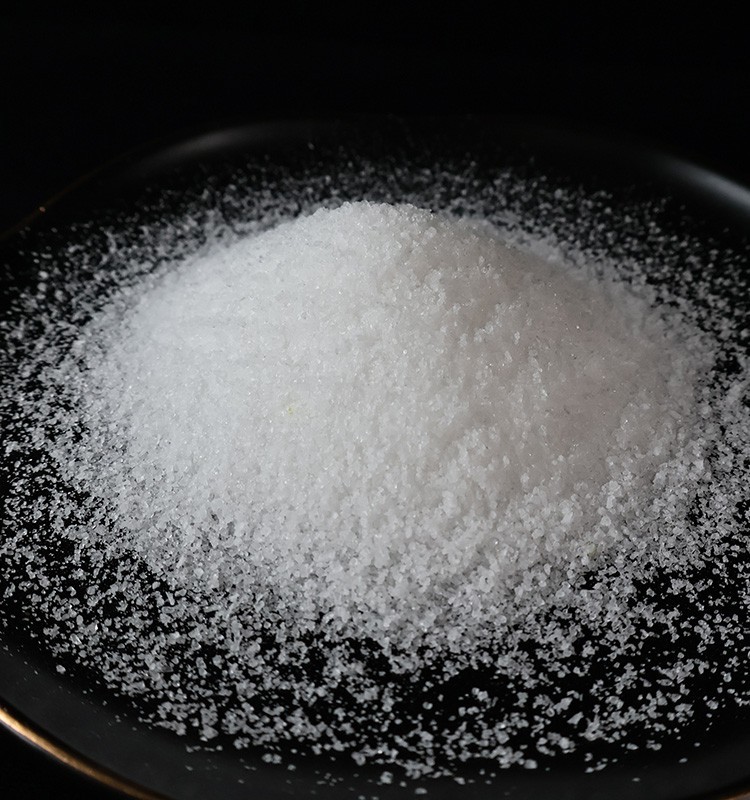
Polyacrylamide can be classified into anionic, cationic, nonionic, and zwitterionic types based on their ionic properties. Different types of polyacrylamide are suitable for different types of wastewater. For example, anionic polyacrylamide is suitable for treating wastewater with coarse suspended particles and high organic content; Cationic polyacrylamide is suitable for treating wastewater with high levels of colloidal impurities and positive charges.
In practical applications, the effectiveness of polyacrylamide is influenced by various factors such as water temperature, water quality, pH value, and dosage of chemicals. Therefore, when using polyacrylamide for wastewater treatment, it is necessary to conduct small-scale and pilot tests according to specific situations to determine the optimal usage conditions and dosage.
In addition, attention should also be paid to the dissolution process of polyacrylamide. It needs to be dissolved in clean water, avoiding the use of sewage or highly acidic water to avoid affecting the dissolution effect. At the same time, the agent should be slowly and evenly added during dissolution, and stirred continuously until it is completely dissolved into a transparent gel like solution.
With the increasingly strict environmental policies in our country and the continuous improvement of people's requirements for environmental quality, the sewage treatment industry has ushered in greater development opportunities and challenges. Polyacrylamide, as an efficient and environmentally friendly wastewater treatment agent, has an increasing market demand. In the future, with the continuous advancement of technology and the expansion of applications, the application prospects of polyacrylamide in the field of sewage treatment will be even broader.
At the same time, we should also recognize that no medication is omnipotent. In the process of sewage treatment, we need to combine various treatment technologies and agents according to the actual situation of the sewage, and carry out comprehensive treatment to achieve the best treatment effect.
Polyacrylamide, as a "magic potion" in sewage treatment, has made important contributions to the development of the sewage treatment industry with its unique properties and wide applications. We should fully recognize and utilize this medicine, and make greater efforts to protect our water resources and environment.

 E-mail:jcl@jichanglong.com
 WhatsApp:+8618560709619
 Address:Block B, Polymer Materials Industry Innovation Park,No. 51, Lutai Avenue, High-tech Zone, Zibo City, Shandong Province


